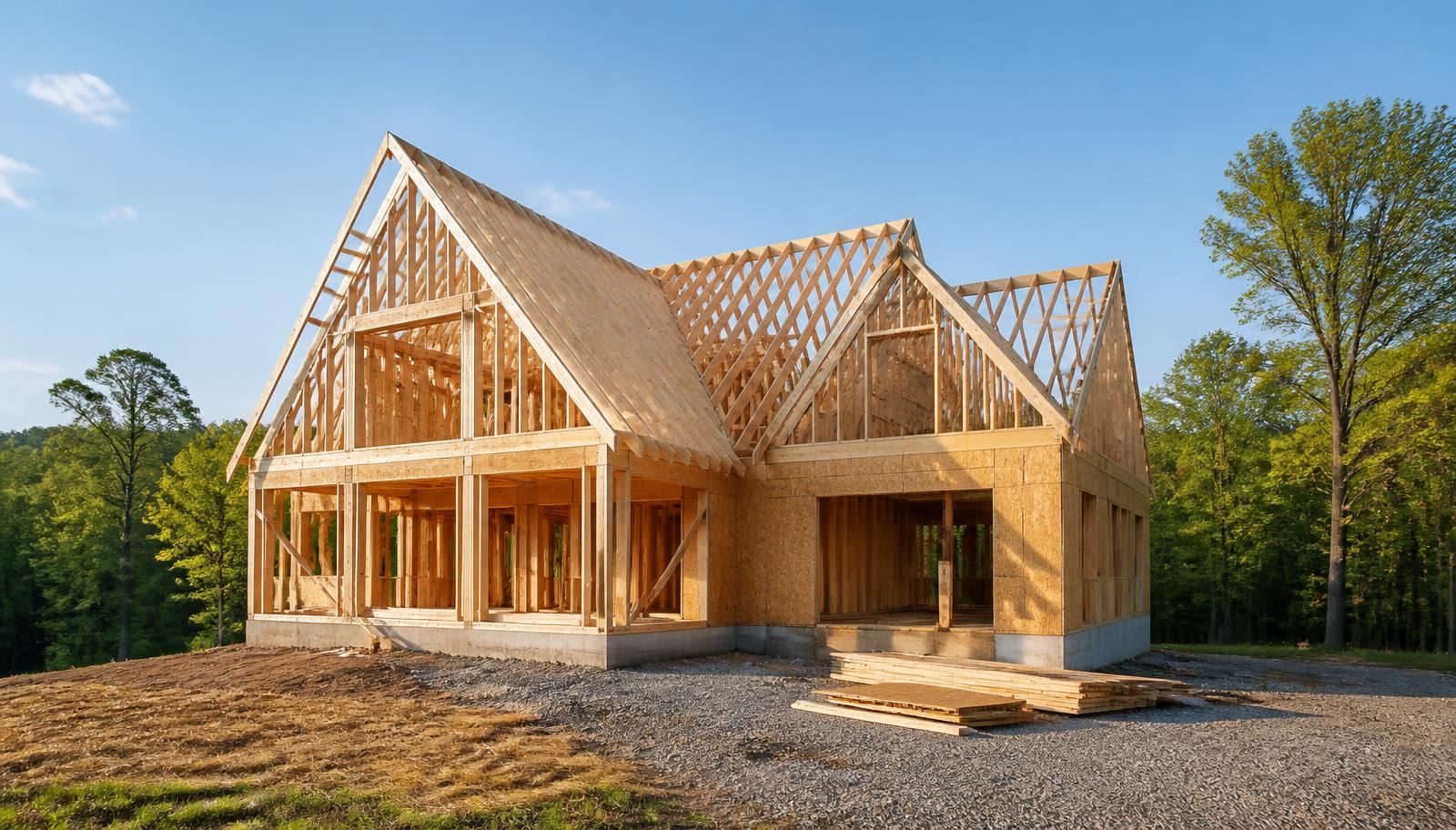
Buyers are usually given a delivery month. What they are rarely given is the shape of the months in between: the long quiet stretch before permits, the astonishing speed of framing, the slow invisible middle, and the compressed final weeks.
Knowing the rhythm turns a stressful year into an interesting one. It also tells you exactly when your decisions actually matter.
Before the ground moves
- Financing and budget
- Full pre-approval, an honest all-in number, and clarity about which path you are on. This is the cheapest month to change your mind.
- Lot and plan
- Selecting the ground and the floor plan, and pricing structural options. Everything structural should be settled here.
- Contract and deposits
- Signature, deposit schedule, and the change order process you will live under.
- Permits and engineering
- Municipal review, stormwater, and utility approvals. This stage is largely outside the builder's control and is a common source of early delay.
The build itself
- Site work and foundation
- Excavation, footings, foundation, waterproofing, and backfill. Weather-sensitive and revealing: this is when site surprises appear.
- Framing
- The fastest and most emotionally satisfying stage. The house becomes real in a matter of weeks.
- Roof, windows, and exterior
- Getting the house dry. Once it is under roof, the schedule becomes far less weather-dependent.
- Rough mechanicals
- Plumbing, electrical, and HVAC, followed by inspections. Rough-in locations are effectively permanent, so this is the last practical moment for placement changes.
- Insulation and drywall
- The visual pause. Progress feels slow because the work is inside the walls.
- Interior finish
- Trim, cabinetry, counters, flooring, tile, paint, and fixtures. Long and detail-heavy.
- Final grade, drives, and landscaping
- Exterior completion, often weather-dependent and sometimes deferred past settlement in winter.
Where delays actually come from
In practice, most schedule movement traces to five sources: municipal permitting, weather during site work, a long-lead material or appliance, late buyer selections, and inspection scheduling.
Only one of those is yours, and it is the one buyers most often underestimate. Selections made two weeks late can push a delivery a month, because a trade that misses its window gets rescheduled behind other jobs.
The single most useful habit during a build: make every selection before its deadline, and put every approval in writing.
The last sixty days
- Final loan documentation
- Updated income, assets, and employment verification. Do not open new credit, change jobs, or move large sums during this window.
- Appraisal and final inspections
- Municipal final, builder quality checks, and lender requirements converge here.
- Pre-settlement walkthrough
- You and, ideally, an independent inspector document a punch list. Photograph everything and get it acknowledged in writing.
- Certificate of occupancy
- The municipality confirms the home is legally habitable. Settlement cannot occur without it.
- Settlement and keys
- Closing, utility transfers, and the start of your warranty period.
How timing affects your rate
A long build introduces a real question: what happens to your interest rate between contract and delivery? Extended rate lock programs, float-down provisions, and builder forward commitments all exist to answer it, and they differ meaningfully in cost and flexibility.
The decision should be made early, with a clear-eyed view of your delivery window rather than the builder's best case. It is far easier to plan a lock strategy at contract than to react to one at drywall.
Questions buyers ask
- How long does it take to build a home in Pennsylvania?
- It depends heavily on the builder, the plan, the municipality, and the season, which is why the honest answer comes from your specific builder as a range rather than a date. Permitting and weather during site work are the two largest variables.
- Can I visit the site during construction?
- Most builders allow scheduled visits and restrict unscheduled ones for insurance reasons. Ask how visits are handled before you sign, since it varies more than buyers expect.
- What happens if the home is not finished on the closing date?
- Contracts handle this differently. Some allow extensions without penalty, some provide remedies to the buyer. It is one of the most important clauses to read before signing, particularly if you are selling a current home.
- When should I give notice on my current home or lease?
- Later than feels comfortable. Wait until the home is under roof with mechanicals complete, and confirm with your builder before committing to a moving date.
Keep reading
Educational information only. Program availability, builder practices, timelines, and costs vary by builder, municipality, and market and are subject to change. This is not a commitment to lend. All buyers are subject to full underwriting and program eligibility. Corie Adams NMLS #1875205. Network Funding, LP NMLS #2297.