Kitchen Table Guide
Construction-to-Permanent Loans
One loan for the build. One loan for the mortgage. One conversation from groundbreak to keys.
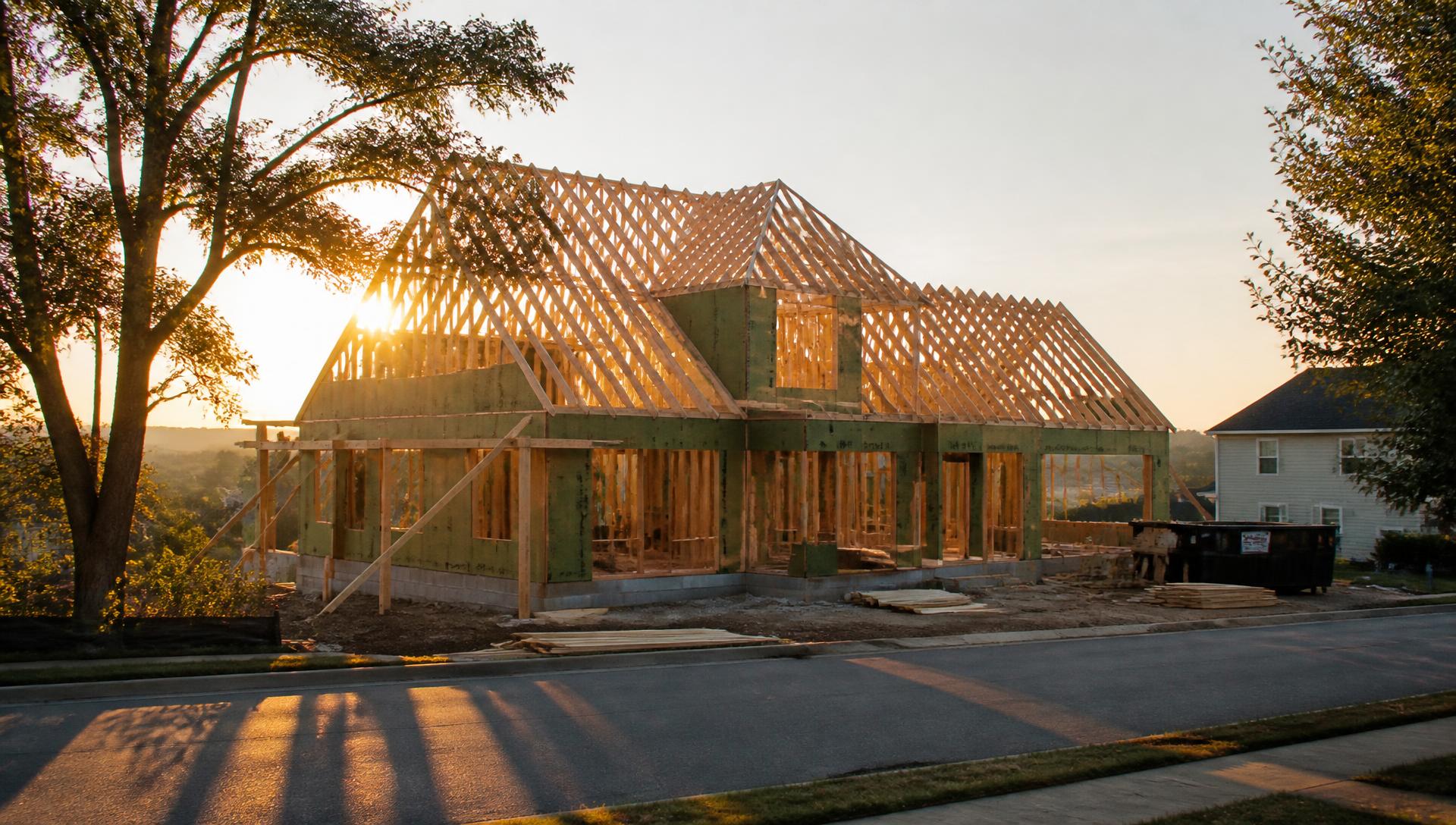
A Construction-to-Permanent loan (often called a "C-to-P" or CP loan) is a single mortgage that funds the construction of your new home and then converts into your permanent long-term mortgage once the home is complete. You approve once, close once, and move in without requalifying at the end.
It's designed for buyers building on land they already own or land they're purchasing—not for buying a finished home from a builder community.
How the Loan Works
- Phase one — construction. Funds are released to the builder in stages, called draws, as construction milestones are completed and inspected. You pay interest only on the amount drawn so far.
- Phase two — permanent mortgage. When the home is finished and a certificate of occupancy is issued, the loan converts automatically into your long-term mortgage (typically a 15-, 20-, or 30-year fixed).
Why Buyers Choose It
- One approval. You qualify once at the beginning of the process instead of requalifying at the end.
- One rate lock. Extended lock options protect you from market movement during the build.
- One set of closing costs. Consolidated fees, one title policy, one appraisal.
- Interest-only during construction. Payments stay light while the home goes up—based only on funds actually drawn.
- Land equity counted. If you already own the lot, that equity can often serve as part of your down payment.
Things to Consider
Not every builder is set up for construction loans, and not every custom project fits the same structure. Draw schedules, contingency reserves, change-order handling, and builder approval all have to be coordinated up front. Getting the mortgage architecture right at the beginning is what makes the difference between a smooth build and a stressful one.
Construction timeline
From approval to permanent financing
- Step 1
Approval and budget
Income, credit, and savings are reviewed and an all-in budget is set including lot, build, and contingency.
- Step 2
Builder review and plans
Your builder's documentation, the construction contract, and the plans and specifications are finalized.
- Step 3
Appraisal and closing
The completed home is valued from plans, and the loan closes before construction begins.
- Step 4
Construction draws
Funds release in stages as milestones are inspected. Interest accrues only on what has been drawn.
- Step 5
Final inspection
The home is inspected and the certificate of occupancy is issued.
- Step 6
Conversion to permanent
The loan converts to your long-term mortgage and regular principal and interest payments begin.
Builder workflow
What this looks like for the builder
Documents up front
License, insurance, contract, plans, and schedule are collected before closing so the first draw is never the first conversation.
Predictable draw requests
Milestone-based requests with inspections scheduled in advance keep trades paid and the calendar intact.
One point of contact
Change orders, inspections, and timing questions go to the same person from groundbreak to certificate of occupancy.
Buyer workflow
What this looks like for the buyer
One approval, one closing
You qualify at the start and close once, rather than running the process twice.
Interest only while building
Payments during construction are based only on funds drawn to date.
Clear conversion point
When the home is complete, the loan becomes your permanent mortgage on terms you already understand.
Comparison
Construction-to-Permanent vs. two-close financing
| Construction-to-Permanent | Construction loan + separate end loan | |
|---|---|---|
| Closings | One | Two |
| Requalification at completion | Not required under the original approval | Usually required |
| Closing costs | One set | Typically two sets |
| Rate certainty | Set at the start, subject to program terms | Determined at the end, in the market of that day |
| Best suited to | Custom builds and build-on-your-land projects | Projects with scope likely to change substantially |
Frequently asked
Questions about Construction-to-Permanent
How does a draw schedule work?
Funds are released to the builder in stages as milestones are completed and inspected — foundation, framing, mechanicals, drywall, and final. You pay interest only on what has been drawn so far.
What does the builder need to provide?
Licensing and insurance documentation, a signed construction contract, plans and specifications, and a realistic schedule. Getting this in early is what keeps draws on time.
What happens to change orders?
Changes that affect price or scope need to be documented and reviewed, because they can affect the appraisal and the loan amount. Tell your loan officer the same week, not at the end.
When does the loan convert?
At completion — generally once the certificate of occupancy is issued and the final inspection is complete. Your permanent payments begin after conversion.
Can I make changes to the loan during construction?
Some adjustments are possible, but the structure is set at closing. That is why the up-front planning conversation matters more here than almost anywhere else.
What if the build runs long?
Extensions and rate strategy are handled case by case under program guidelines. Early notice gives us options; late notice usually does not.
Educational information only. Draw schedules, builder approval requirements, conversion terms, and program availability vary by loan program, builder, and market and are subject to change. This is not a commitment to lend. All buyers are subject to full underwriting and program eligibility.
A conversation, not a sales pitch
Pull Up a Chair.
Every custom build is different. Let's talk through your lot, your builder, and your timeline—and get the financing architecture right before you break ground.