Kitchen Table Guide
One-Time Close Construction
One closing. One set of fees. One straightforward path from groundbreak to keys.
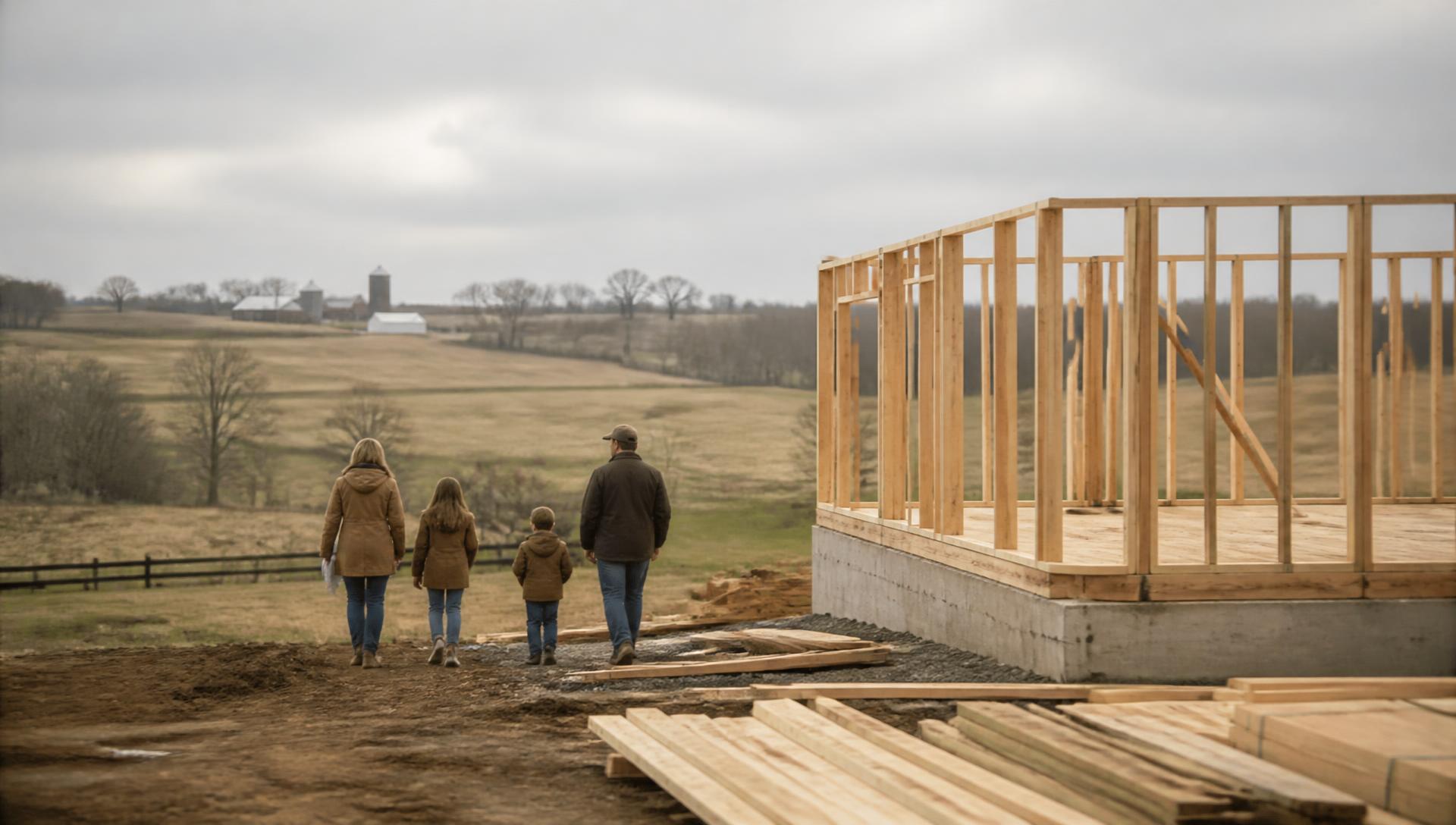
A One-Time Close (OTC) construction loan is the cleanest way to finance a custom build. You close once, at the beginning. The loan funds land, construction, and your permanent mortgage in a single package—so there's no second closing, no second appraisal, and no requalifying at the end of construction.
How It Works
- One closing at the start. Land, construction, and permanent financing are wrapped into a single loan.
- Draws during construction. Funds are released to the builder in stages as milestones are inspected and completed.
- Interest-only payments during the build. You only pay interest on the funds drawn so far.
- Automatic conversion. When the home is finished, the loan simply converts to your permanent mortgage—typically a fixed rate across Conventional, FHA, VA, or USDA structures.
Why Buyers Choose OTC
- No second closing costs. Traditional two-time-close programs require a full second closing at the end of construction. OTC eliminates that entirely.
- Rate protection. Your permanent rate is set up front—no risk of requalifying into a very different market twelve months later.
- Predictable budget. You know your permanent payment before ground is broken.
- Land equity counts. If you already own the lot, that equity is typically credited toward your down payment.
Who It's Best For
OTC financing shines for custom builds on land you own (or land you're purchasing at closing), where the timeline is long enough that a second closing would add real cost and real risk. It also works beautifully for buyers who want budget certainty from the very first day of the project.
Who it serves
Who a One-Time Close is designed for
Build-on-your-land buyers
You own the lot, or you're buying it as part of the project, and you're working with a custom or semi-custom builder.
Buyers with longer delivery windows
When a build stretches across many months, closing once at the start removes a second round of uncertainty at the end.
Buyers who want cost clarity
One appraisal, one title policy, one set of closing costs — easier to budget than two separate transactions.
Construction timeline
How the process unfolds
- Step 1
Pre-approval and budget
We review income, credit, and savings and set a realistic all-in budget including the lot, the build, and contingency.
- Step 2
Builder and plans
Your builder is reviewed and approved, and plans, specifications, and the construction contract are finalized.
- Step 3
Appraisal from plans
The completed home is valued from the plans and specifications rather than from a finished house.
- Step 4
One closing
You close once. Construction financing and your permanent mortgage are both established that day.
- Step 5
Construction draws
Funds are released to the builder in stages as milestones are inspected. You pay interest only on what has been drawn.
- Step 6
Completion and conversion
Once the certificate of occupancy is issued, the loan converts to your permanent mortgage and regular payments begin.
Comparison
One-Time Close vs. traditional construction financing
| One-Time Close | Two-time close | Construction loan + end loan | |
|---|---|---|---|
| Number of closings | One | Two | Two |
| Sets of closing costs | One | Typically two | Typically two |
| Requalification at completion | Not required under the original approval | Usually required | Usually required |
| Payments during construction | Interest only on drawn funds | Interest only on drawn funds | Interest only on drawn funds |
| Best suited to | Custom and build-on-your-land projects | Projects with changing scope | Buyers purchasing a completed spec home |
Frequently asked
Questions buyers ask about One-Time Close
What does "one-time close" actually mean?
You close once, at the beginning. The same loan funds construction and then becomes your permanent mortgage, so there is no second closing and no second set of closing costs.
Do I have to requalify when the home is finished?
Under a one-time close structure you qualify once up front. That said, your financial picture needs to stay stable through the build — new debt or a job change can still affect the outcome.
What are my payments during construction?
Typically interest only on the funds that have actually been drawn, so payments start small and grow as the home goes up.
Can the land I already own count toward the down payment?
Often yes. Equity in a lot you own can frequently be applied toward your required investment. The specifics depend on how and when you acquired it.
Does my builder have to be approved?
Yes. Builders are reviewed for licensing, insurance, and experience before construction financing is finalized. We handle that step early so it never becomes a delay.
What happens if construction takes longer than planned?
Delays are common and manageable when they are known early. Draw schedules, inspections, and rate strategy can all be adjusted if we hear about a change as it happens.
Educational information only. Program availability, draw schedules, builder approval requirements, and terms vary by loan program, builder, and market and are subject to change. This is not a commitment to lend. All buyers are subject to full underwriting and program eligibility.
A conversation, not a sales pitch
Pull Up a Chair.
If you're planning a custom build, let's talk about whether One-Time Close is the right structure for your project—and design the loan around your builder, your lot, and your timeline.