“River towns are layered because nobody ever cleared them out and started again.”
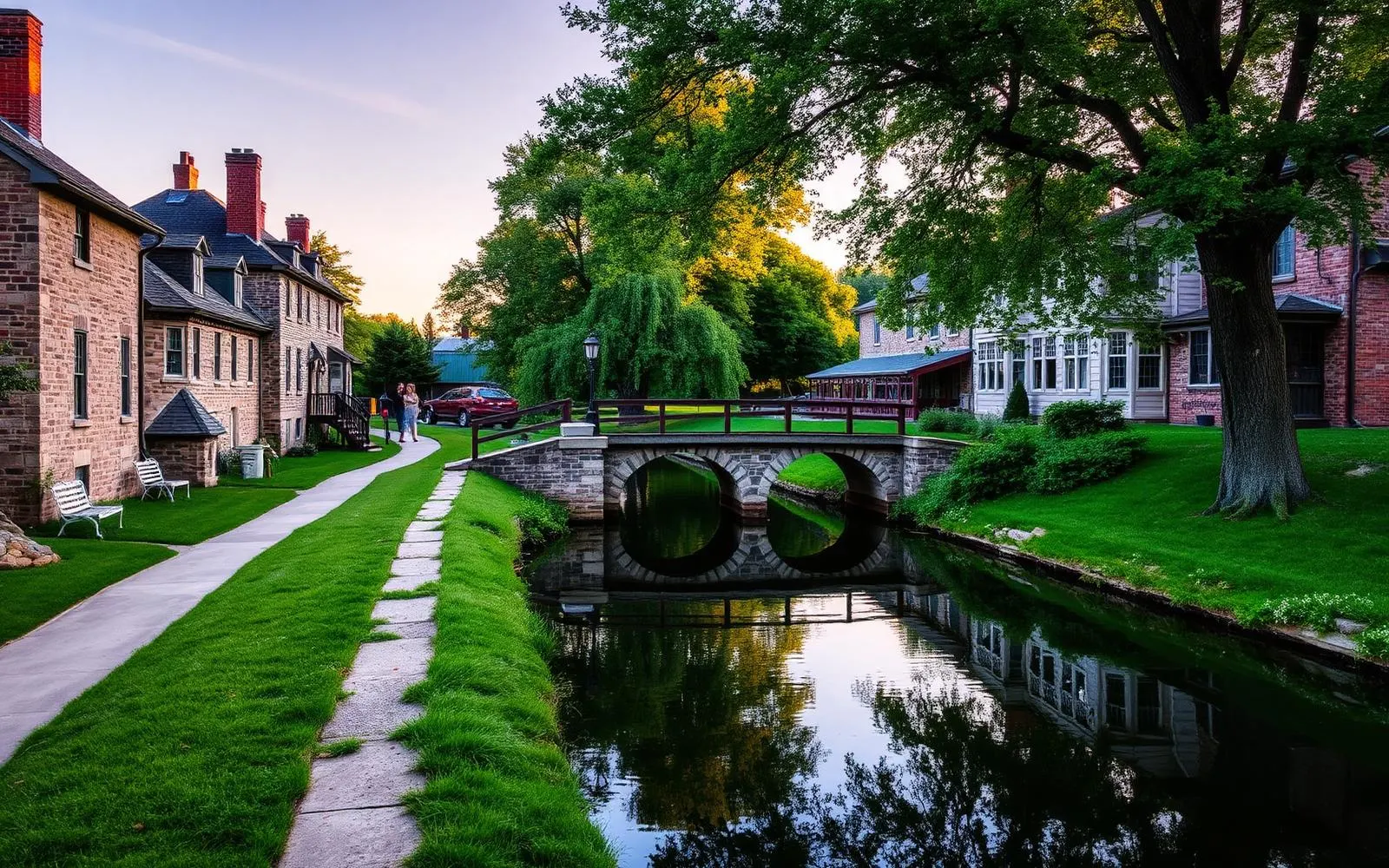
Walk the towpath at New Hope on a summer evening and the composition is unusually rich for such a small place. On one side the Delaware Canal, still and green under the trees. On the other, stone and brick buildings from several different centuries standing close to the water, with gardens squeezed between them and doors opening straight onto the path.
The canal itself is the reason the town looks the way it does. The Delaware Canal, which runs roughly sixty miles along the river from Easton to Bristol, was built to move coal and freight in the nineteenth century and is now a state park, its towpath a continuous walking route. The buildings that line it were working buildings. That is exactly why they are beautiful.
Layering, and why it cannot be bought in one order
The visual quality people respond to in these towns is layering: several eras, several materials and several uses stacked in a small area. A stone mill next to a frame house next to a garden wall next to a gallery in what was clearly once something else.
Translating that into a house means resisting the impulse to make everything agree. A room can hold an eighteenth century form, a mid century chair and a contemporary lamp if the materials and the scale are in conversation. What breaks it is uniformity of date, which is why a house furnished entirely from one period reads as a set.
The color of a river town
The palette along the canal is easy to observe and easy to use. Wet stone greys, the deep green of still water under shade, the soft red of old brick, cream and buff on painted stucco, black iron, and the particular green used on shutters and porch rails for two hundred years.
Those colors work indoors because they are all low in saturation and warm in undertone. A room painted in a deep water green with cream trim and black hardware borrows the whole corridor without a single reference to a canal.
Borrow from the studio, not the gallery
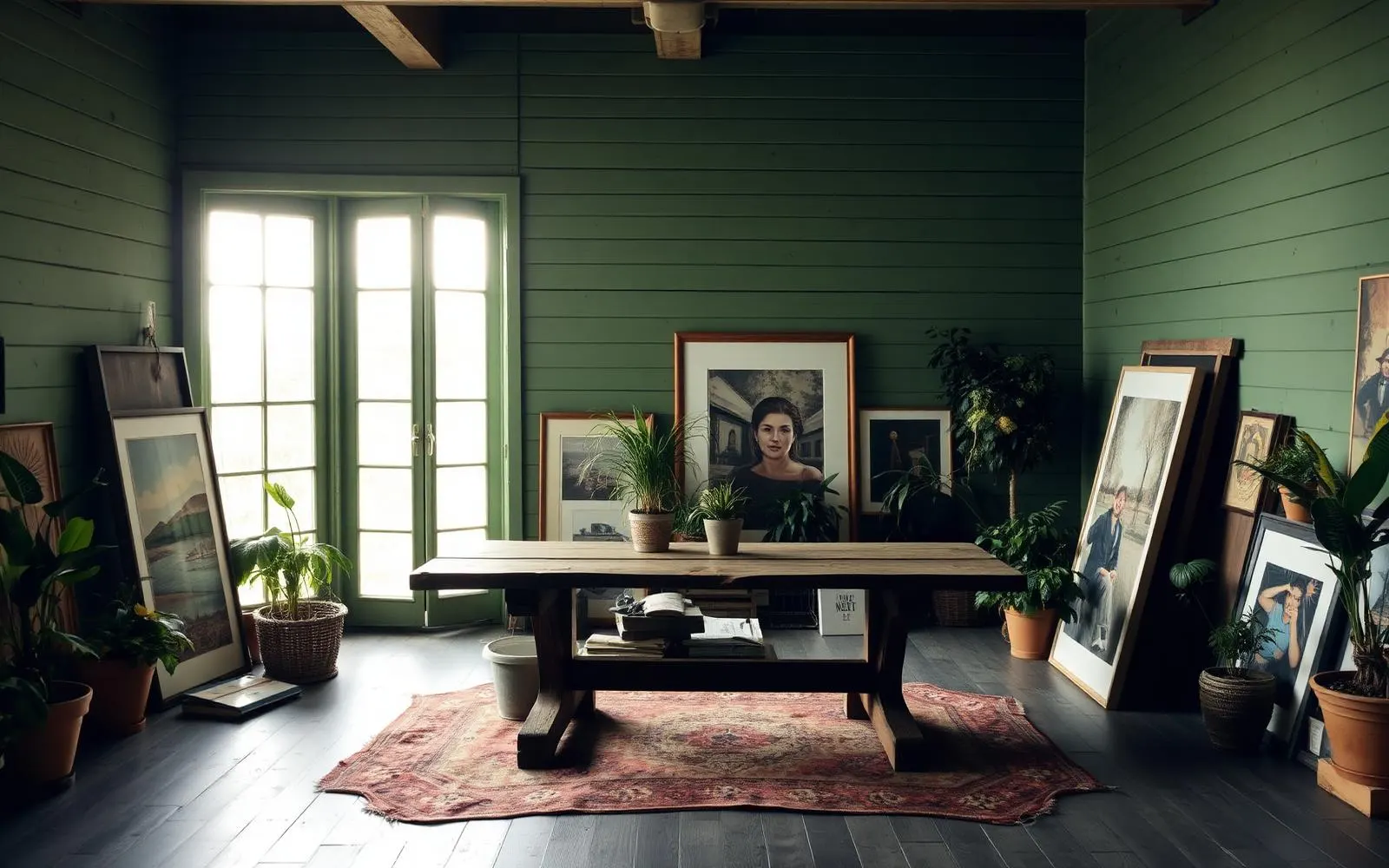
This stretch of Bucks County has a long association with painters and with a working artist community, and the rooms that came out of that tradition have a particular quality. Big north light, plain walls, surfaces that can be marked, work leaning rather than hung, and furniture chosen for use.
That is a more livable model than the gallery. Leaning framed work on a picture rail or a mantel lets a house change without patching plaster. A large plain table in a room with good light will be used for eating, working, homework and projects, which is more than most dining rooms manage.
Old inn hospitality, translated
The old inns along the river corridor share a set of moves worth stealing. Small rooms rather than one big one. Low ceilings treated as an asset with warm light rather than fought with pale paint. A bar or a sideboard near the entrance where things are set down. Worn floors nobody worries about. Seating in pairs and fours rather than one large arrangement.
Break a large room into two or three small settings and people will actually talk in it.
Gardens on a narrow lot
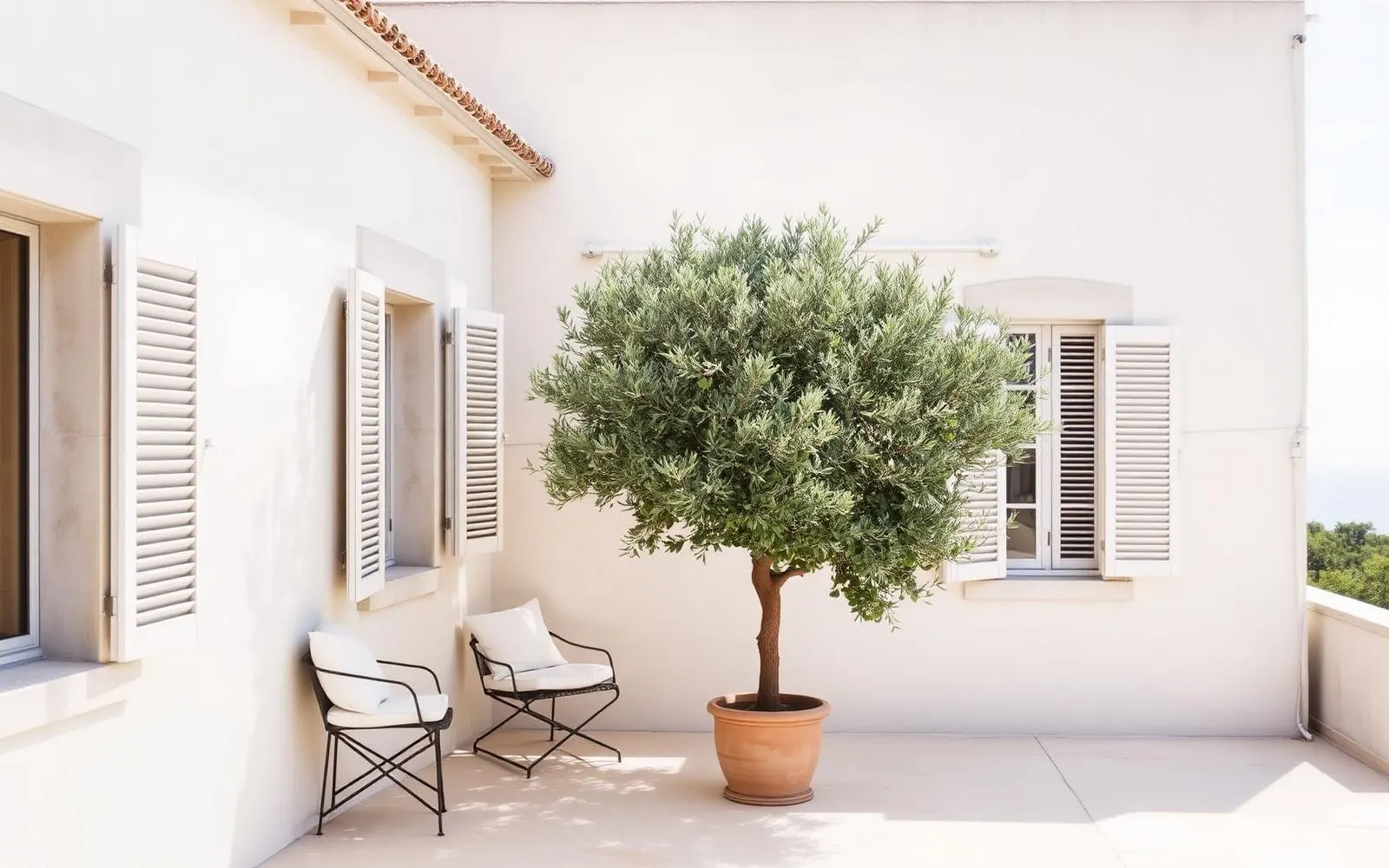
River town gardens are small, enclosed and vertical. A wall or a fence, climbers on the wall, pots at three heights, a single tree that shades most of the space, gravel or stone underfoot, and one place to sit. There is no lawn, and the absence is never missed.
Any Pennsylvania house with an awkward side yard can use this recipe directly. Enclosure is what makes a small outdoor space feel like a room rather than a leftover.
The practical list
- Mix at least three eras in every room, and let the materials rather than the dates agree.
- Take a real color palette from a place you love rather than a paint fan deck.
- Lean art rather than hanging all of it, and keep one large plain work table.
- Break big rooms into small settings; place a surface within reach of every seat.
- Enclose small outdoor spaces and plant them vertically.
None of this requires living on a canal. It requires the same thing the canal towns had, which is a willingness to keep what works, add carefully, and let the layers show.
What to take from this
- Layer eras deliberately; uniform date is what makes a room feel like a set.
- Take palettes from observed places, and keep them low in saturation and warm.
- Use the studio model: plain surfaces, leaning work, one large usable table.
- Small enclosed gardens outperform leftover side yards.
The Journal is written for people thinking about homes, not just financing them. Articles are educational and reflect general observation about Pennsylvania housing, architecture, and daily life. Nothing here is an offer to lend, a commitment to a rate, or an appraisal of any particular property. Corie Adams, NMLS #1875205. Network Funding, LP, NMLS #2297. Equal Housing Opportunity.