“The test of a walkable town is not whether you can walk. It is whether you do it on a Tuesday when nothing is happening.”
Lititz gets written about a lot, and almost always in the register of the charming day trip. That version is accurate and incomplete. A visitor sees the pretty half mile. A resident lives in the other parts, the parking on a Saturday in December, the school traffic at three o'clock, the sound of the park in August.
This is an attempt at the resident version. The borough sits roughly eight miles north of Lancaster city, was settled by Moravians in the middle of the eighteenth century, and has kept an unusually intact walkable center for a town of its size. Everything below follows from those three facts.
The walking is real, and it has an edge
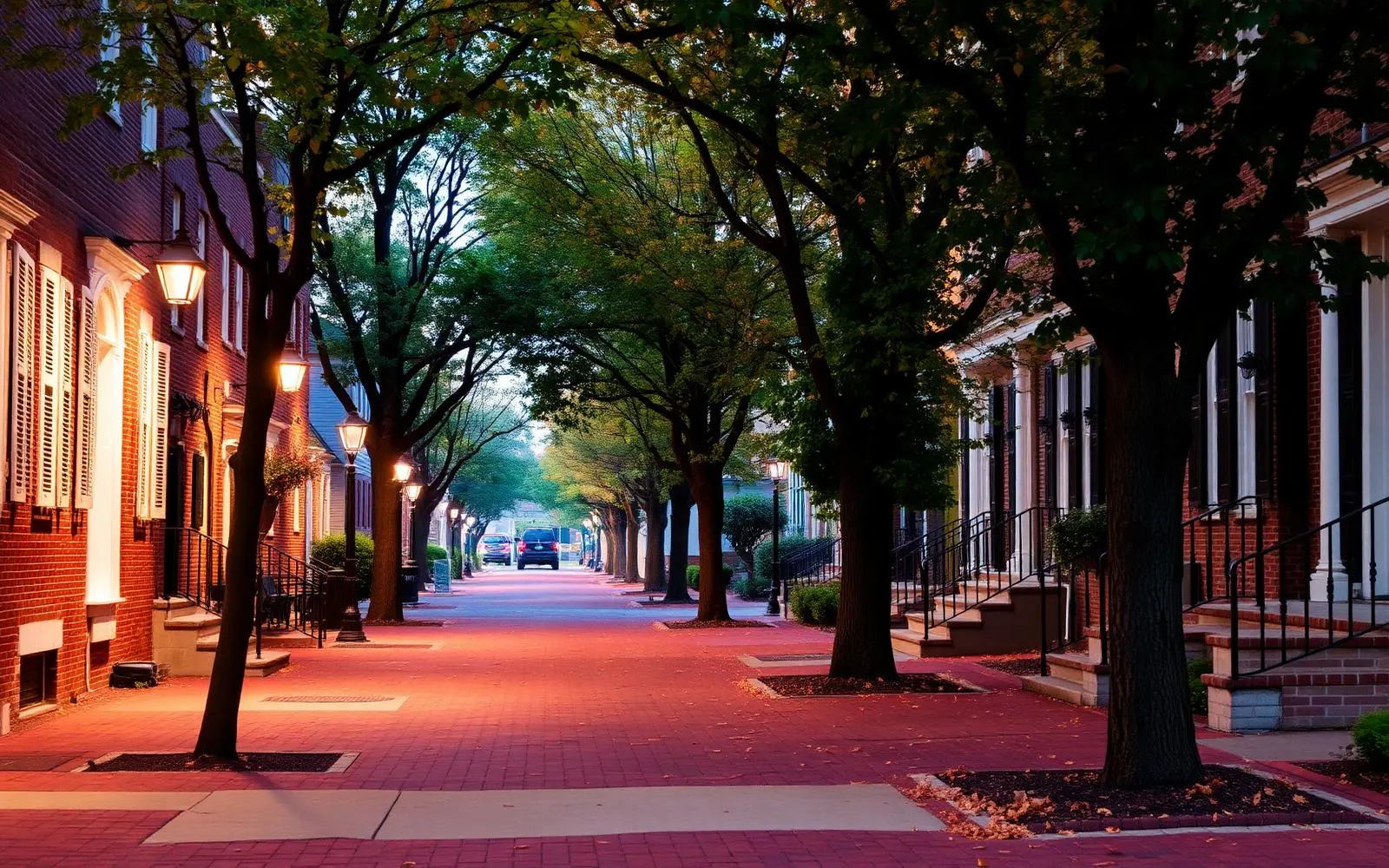
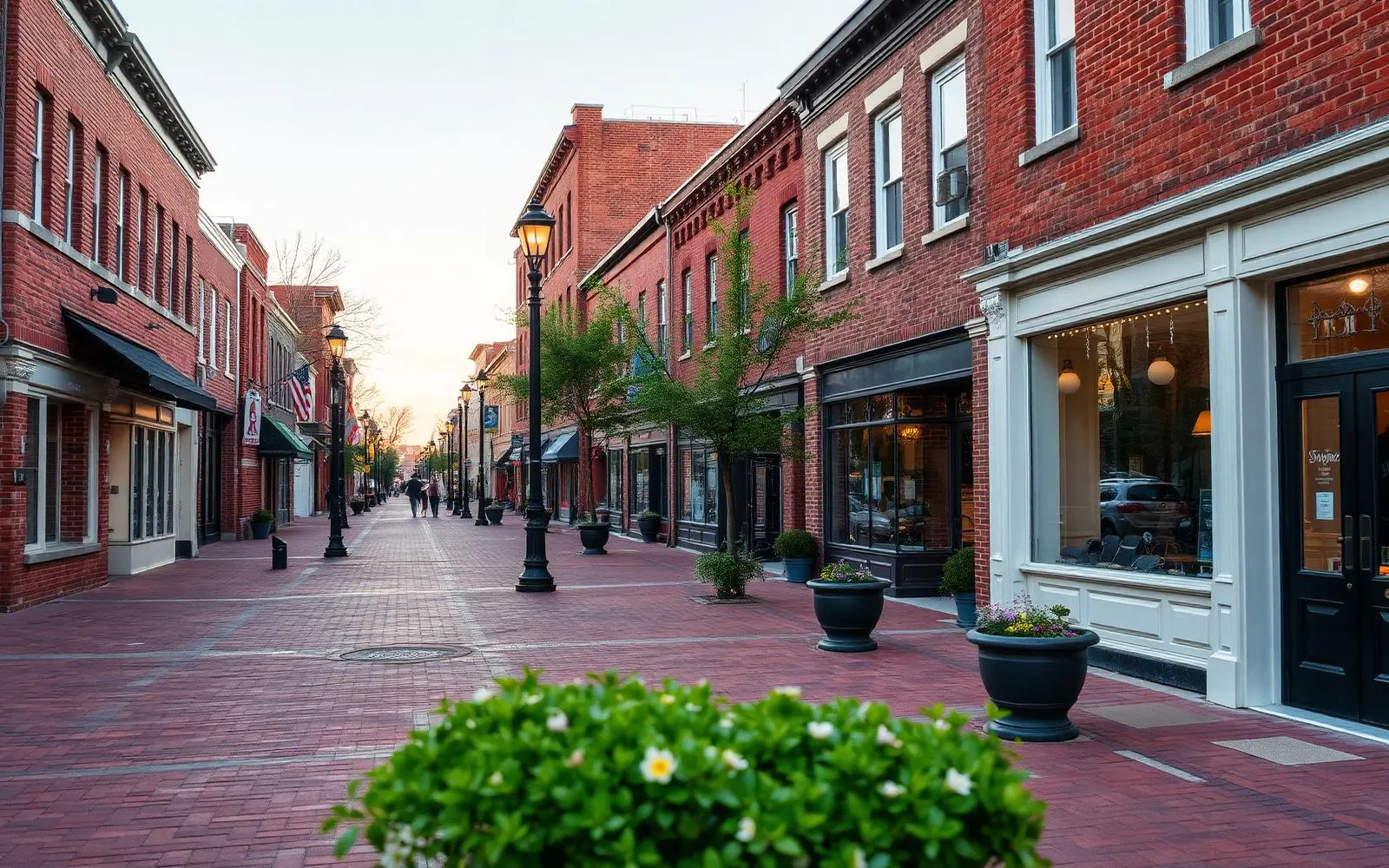
The historic core is genuinely walkable in the plain sense: sidewalks that connect, blocks short enough to be interesting, destinations at both ends. From much of the older housing stock you can reach the main street on foot in ten or fifteen minutes, and people do, in numbers, on weekday evenings.
That walkability has a boundary. Move outward into the newer subdivisions and the pattern changes to the one familiar everywhere else in the county: wider roads, longer distances, a car for everything. Buyers who assume the whole town works like the center are often surprised. When people say they want to live in Lititz, they usually mean a specific and fairly small set of blocks.
Gathering places, in the plural
A town center works when it has more than one kind of place to be. Lititz has a spring fed park at the edge of the business district, a long standing main street of independent shops and restaurants, a public library, churches with deep local roots, and the industrial history that still anchors the local identity. The Julius Sturgis Pretzel Bakery on East Main Street, established in 1861, is generally described as the first commercial pretzel bakery in the country, and the town leans into that story without being consumed by it.
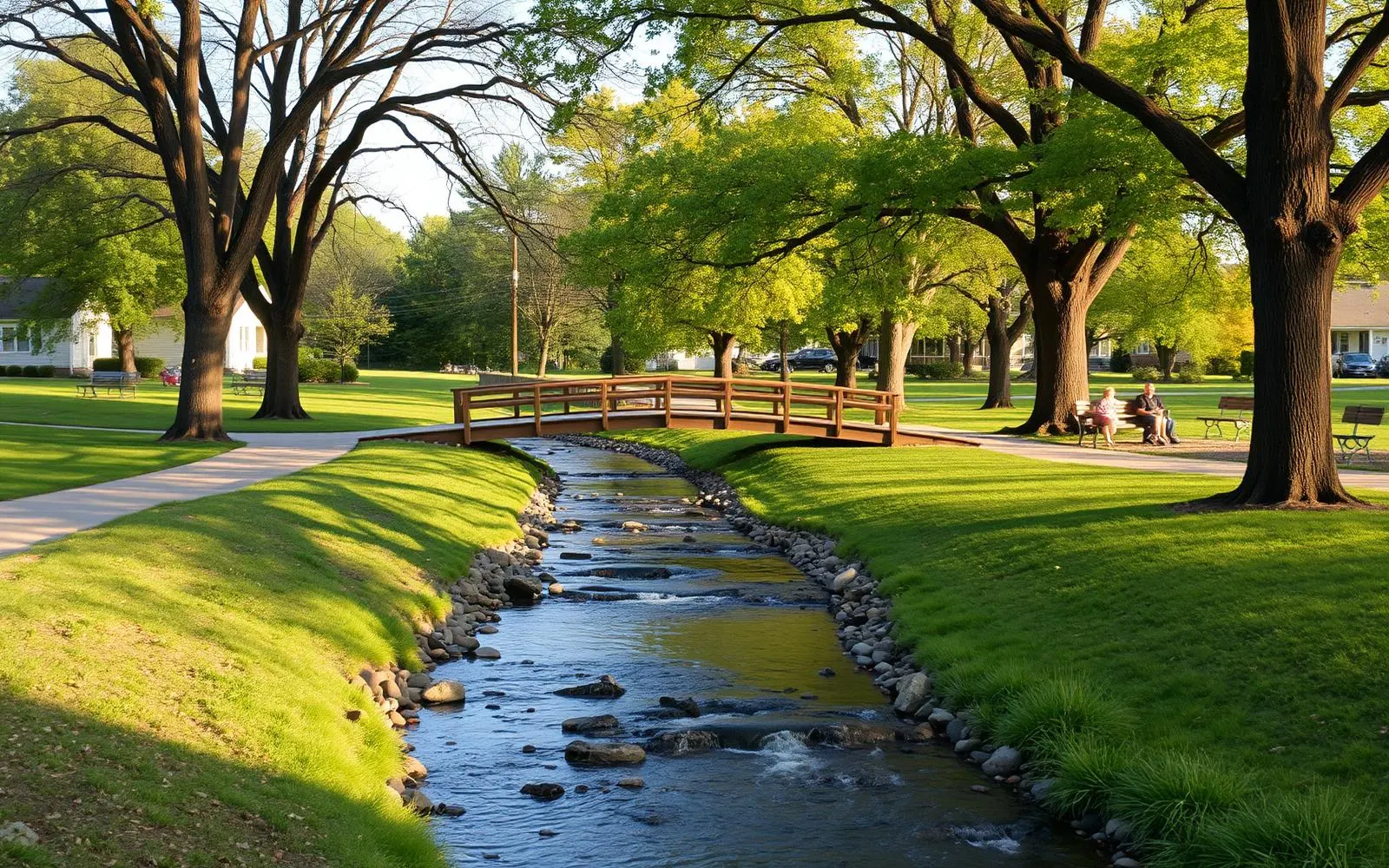
The functional effect of a park adjacent to shops is that errands turn into time spent. People buy something and then sit. That single adjacency does more for community life than any amount of programming.
Architecture, close together
The housing in the older sections is a compressed lesson in Pennsylvania building. Brick and stone from the town's earliest decades, Federal and Greek Revival details on the main streets, generous Victorian porches on the blocks laid out later, and modest twentieth century houses filling in the edges. Lots are small and buildings sit close to the sidewalk, which is what makes the streets feel like rooms.
It also means that living here involves neighbors at close range, alleys, shared driveways, and the maintenance realities of older buildings. People who love this housing stock love it specifically. People who want separation tend to find it a mile out and then drive in.
Seasons, and the tourism question
The year has a shape. Spring and early summer bring steady evening activity. Late summer belongs to the park and the pools of shade. Autumn is busy on weekends. The holiday season is the loudest stretch, and it is the one residents talk about most, because a small historic center that draws visitors is also a small historic center with finite parking.
A town that visitors love is a good problem, but it is still a problem you live inside of.
Most people settle into a set of habits: shop on weekday mornings, park a few blocks out and walk, treat the peak weekends as a spectator sport. The tourism supports the businesses that make the town walkable in the first place, which is the trade residents generally decide is worth making.
Getting to Lancaster and beyond
Lancaster city is a short drive south, close enough that many households treat it as their second downtown for work, restaurants and the airport run. Routes 501 and 772 carry most of the local traffic, and both slow considerably at the beginning and end of the school day. Commutes toward Harrisburg or Reading are ordinary rather than easy, and anyone considering one should drive it at the actual hour they would be driving it.
How to test the place yourself
- Visit on a Tuesday evening in a plain month, not on a festival weekend.
- Park where you would actually park if you lived there, and walk the route to the main street.
- Stand on a block at three in the afternoon on a school day.
- Walk the same block after dark and notice how many lit windows there are.
Towns reveal themselves in their ordinary hours. Lititz holds up unusually well in those hours, which is the most honest thing that can be said for it.
What to take from this
- The walkability is concentrated in the historic core; newer edges are car dependent.
- A park beside the business district is the feature that makes evenings social.
- Peak visitor weekends and holiday season shape resident habits, especially parking.
- Test any town on an ordinary Tuesday, not on its best weekend.
The Journal is written for people thinking about homes, not just financing them. Articles are educational and reflect general observation about Pennsylvania housing, architecture, and daily life. Nothing here is an offer to lend, a commitment to a rate, or an appraisal of any particular property. Corie Adams, NMLS #1875205. Network Funding, LP, NMLS #2297. Equal Housing Opportunity.