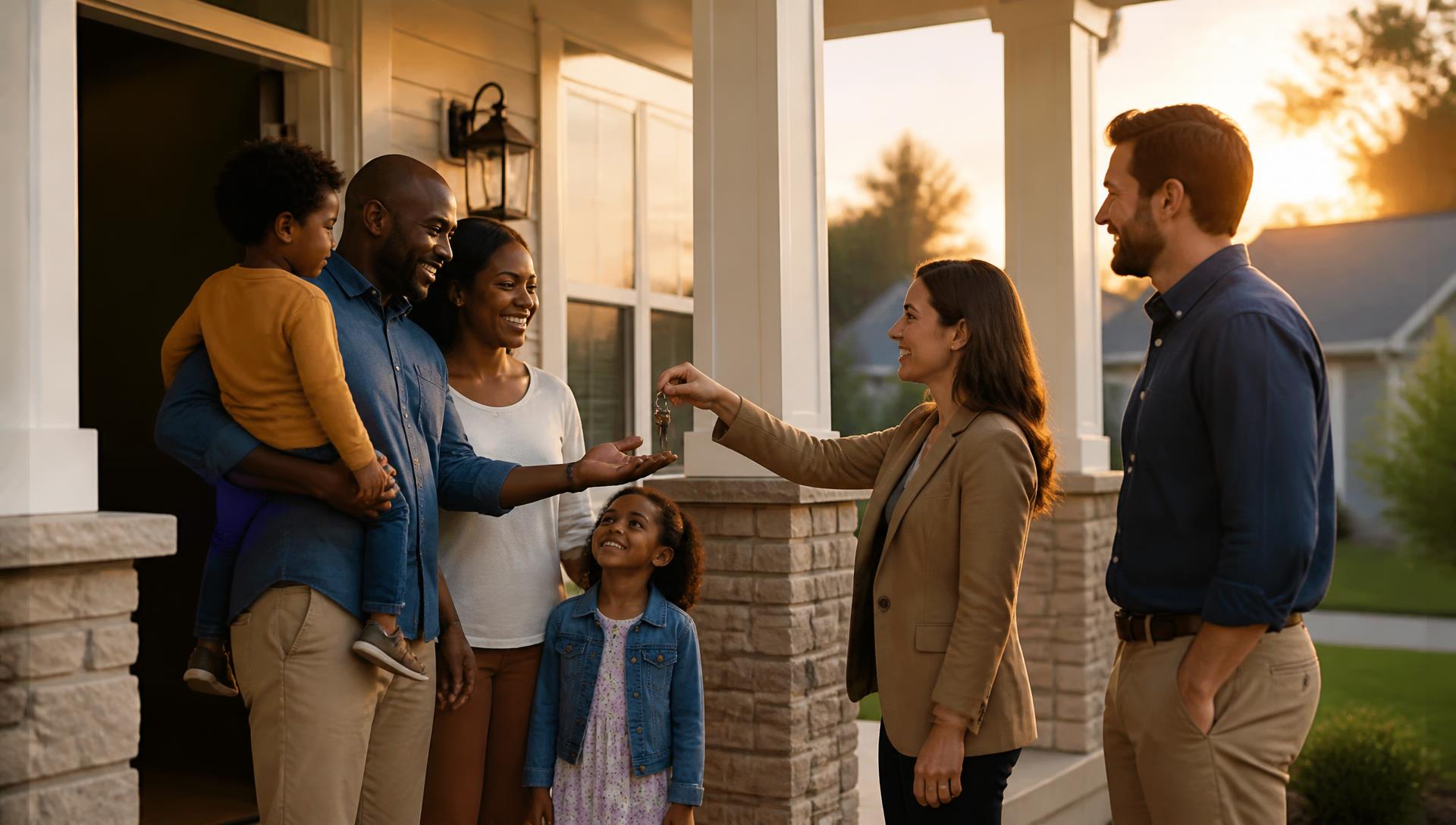
A family receiving keys on the porch of a newly completed home at golden hour

Builder Success Stories

What the file taught us.

These are field notes, not advertising. Each one describes a situation that came up in a real corner of the new-construction business, what was done about it, and the lesson worth carrying into the next contract. Names and identifying details are left out on purpose.

A note on tone

Outcomes are useful. Boasting is not.

Every story here is written for the person who might face the same situation next month. The interesting part is rarely that a file closed — it is what nearly stopped it, and what changed the trajectory.

Details that could identify a buyer are omitted, and nothing described here should be read as a promise of a particular result.

PhotographyCase study — documentary photography reservedReserved for custom documentary photography

Case study

A twelve-month build and a buyer who almost walked

The contract was signed in a rising market. The home would not be finished for nearly a year, and the buyer's confidence was the fragile part.

Situation
A family under contract on a home with a long delivery window grew anxious that their approval would not survive the build. Every rate headline became a reason to reconsider.
Approach
The rate strategy was selected against the delivery date rather than the day of application, and the family received a scheduled check-in at each construction milestone so the process never went quiet.
Outcome
The file reached closing prepared, and the builder held a delivery slot that would otherwise have been re-marketed.

Buyer anxiety on a long build is a communication problem before it is a financing problem. A calendar solves most of it.

PhotographyBuyer story — documentary photography reservedReserved for custom documentary photography

Buyer story

Two closings, one week, no improvisation

A move-up buyer with real equity and no plan for how to use it against a build schedule.

Situation
The buyers needed the proceeds from their existing home but could not risk being without a place to live if the new home slipped.
Approach
The sale timeline was established at contract and worked backward from the delivery date, with a contingency structure identified before it was needed.
Outcome
Both closings landed in the same week, planned months in advance rather than negotiated under pressure.

Sequencing, not qualification, is the most common stall in new construction. It is solvable when it is raised early.

PhotographyPartnership — documentary photography reservedReserved for custom documentary photography

Partnership

What changed when the sales team stopped guessing about credit

A sales office was disqualifying buyers at the desk without meaning to.

Situation
Counselors, trying to be helpful, were answering credit and payment questions from experience rather than from a file — and discouraging buyers who were closer to qualifying than they looked.
Approach
The team adopted a simple rule: never diagnose credit on site, always refer for a no-pressure review, and use shared language for what a pre-approval actually means.
Outcome
Traffic that would previously have been written off returned to the pipeline.

The sales desk is not the right place to make a credit decision, and the cost of guessing is invisible.

PhotographyCase study — documentary photography reservedReserved for custom documentary photography

Case study

Getting the draw rhythm right before ground was broken

On a custom build, the payment schedule is a relationship, not a formality.

Situation
A custom builder and a first-time construction buyer had different assumptions about when money would move and who would confirm each stage.
Approach
The draw and inspection cadence was walked through with everyone in the room before the first payment was due, and change orders were treated as a normal event with a defined route.
Outcome
The builder was paid on schedule throughout, and no stage was held up waiting on documentation.

Most construction payment friction comes from unstated assumptions made in the first two weeks.

PhotographyCommunity highlight — documentary photography reservedReserved for custom documentary photography

Community highlight

A Lancaster County community that grew on referrals

The strongest marketing in a new community is a buyer who felt looked after.

Situation
A growing community relied heavily on word of mouth, which meant every buyer's experience carried disproportionate weight.
Approach
Financing communication was treated as part of the buyer experience — proactive updates, honest timelines, and no promises the process could not keep.
Outcome
Referral traffic became a meaningful share of new contracts in the community.

Reputation compounds. The financing experience is part of the product a builder is selling.

PhotographyBuyer story — documentary photography reservedReserved for custom documentary photography

Buyer story

The strongest buyer in the community looked weak on paper

An employment contract, deferred student debt, and limited reserves.

Situation
A newly attending physician was nearly steered away from a home they could comfortably afford because a standard review misread the profile.
Approach
The file was reviewed against programs written for that situation, with the start date planned around the delivery window.
Outcome
The buyer stayed in the community and closed on schedule.

Some strong buyers are simply shaped differently. Recognizing the profile early is most of the work.

Stories are illustrative and describe general practice. They are not a commitment to lend and do not guarantee a similar result. Outcomes depend on the buyer's qualification, the builder, the market, and program guidelines in effect at the time of application.

A conversation, not a pitch

Your community could be the next field note.

The most useful stories come from builders willing to look honestly at what nearly went wrong. That is also what makes a partnership work.