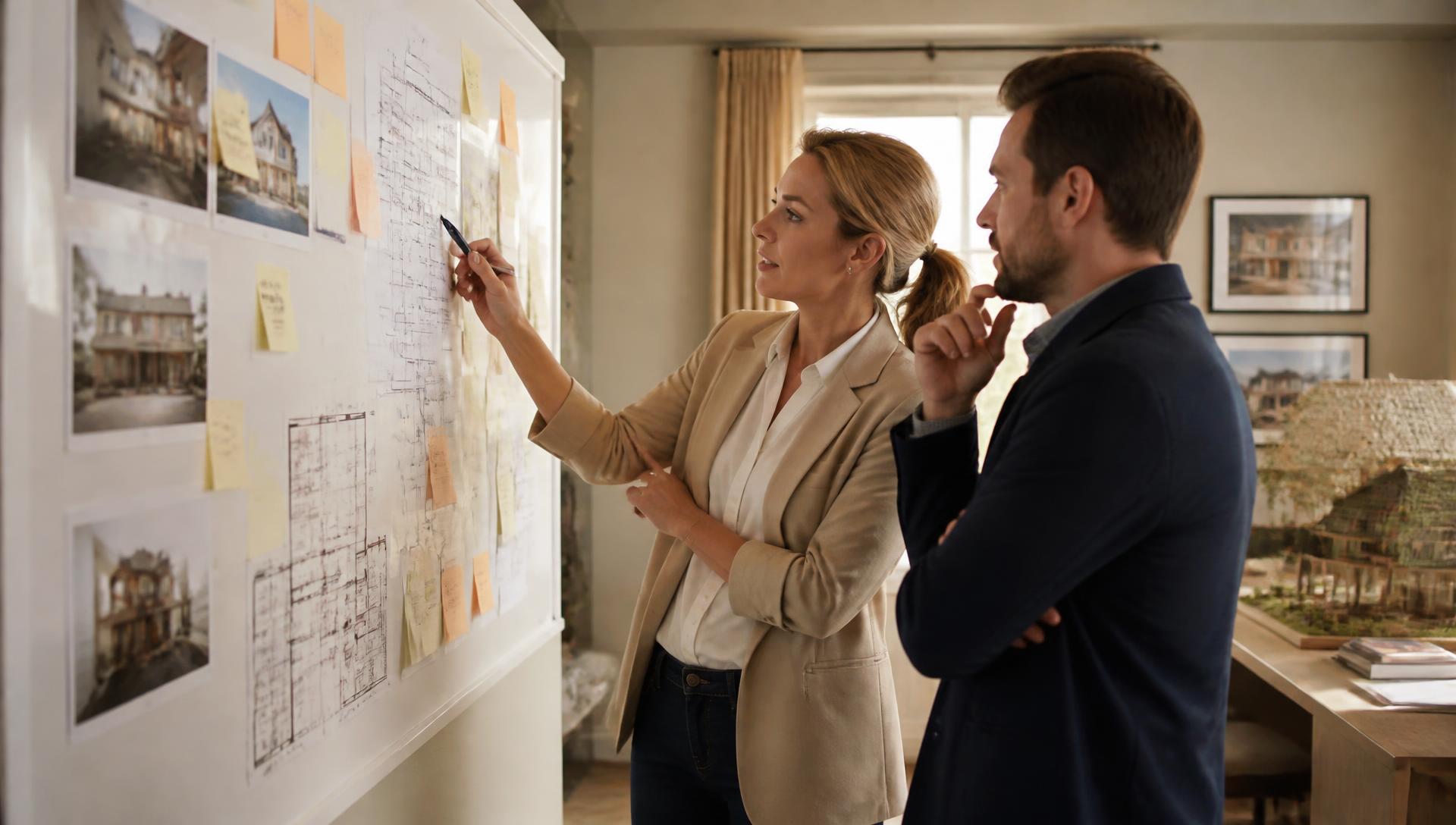
Two professionals mapping out a strategy on a whiteboard in a model home sales office

Builder Playbooks

Every playbook starts with a problem.

Not topics. Problems — the recurring ones that cost a builder contracts, delivery slots, and reputation. Each playbook names the problem, describes the moves that solve it in practice, and states the outcome you should expect when it is handled well.

How to use these

Written to be handed to somebody.

A playbook is only useful if a sales manager can read it once and run it. Each one is short, specific, and free of anything a builder cannot act on. Where a deeper explanation already exists on this site, it is linked rather than repeated.

Downloadable versions of each playbook are in production. When they are ready they will appear here and in the Toolbox — not before.

01

The problem

Buyers reach the contract table without a reviewed file.

Helping Buyers Qualify Earlier

Most late-stage problems were visible on day one. Moving qualification forward converts more traffic and protects the delivery schedule.

The moves

  • Put a short financing conversation into the first model-home visit, not the third.
  • Distinguish pre-qualification from a reviewed pre-approval before a contract is written.
  • Identify credit, documentation, and timing issues while there is still runway to fix them.
  • Give the sales team language that invites the conversation instead of screening buyers out.

The outcome

Fewer contracts written on files that were never going to close, and earlier visibility on the ones that need work.

Sales counselor toolboxPrintable version in production
02

The problem

Contracts fall apart in month five for reasons nobody flagged in month one.

Reducing Financing Fallout

Fallout is rarely a surprise. It is usually an unmonitored change — new credit, a job move, a price increase from selections — that surfaced too late.

The moves

  • Set a checkpoint cadence tied to construction milestones rather than the calendar.
  • Tell buyers at contract, and again at drywall, what not to finance during the build.
  • Route every price change from selections and options back to the lender the same week.
  • Keep the builder informed on file health without exposing borrower detail.

The outcome

Problems get found while they are still fixable, and the delivery schedule stops absorbing the surprise.

Construction financing overviewPrintable version in production
03

The problem

The buyer's current home has to sell before the new one closes.

Supporting Move-Up Buyers

The most common stall in new construction is sequencing, not qualification. There are several ways to structure it, and the right one depends on the delivery window.

The moves

  • Establish the sale timeline at contract and work backward from the delivery date.
  • Review the structures available for buyers carrying an existing mortgage.
  • Coordinate with the listing agent so the two closings are planned, not improvised.
  • Build a contingency plan before it is needed.

The outcome

Move-up buyers stop self-disqualifying, and the timeline is planned rather than negotiated under pressure.

Bridge financingPrintable version in production
04

The problem

High-earning professionals look unqualified on paper.

Working With Physician Buyers

Residents, fellows, and newly attending physicians often have a contract in hand and a balance sheet that a standard file misreads.

The moves

  • Recognize the profile early: employment contract, deferred student debt, limited reserves.
  • Review programs written for this situation rather than forcing a conventional box.
  • Plan around a start date that may fall mid-build.
  • Set expectations for documentation that differs from a W-2 file.

The outcome

A strong buyer stays in the community instead of walking away from a qualification conversation that missed the point.

Physician financingPrintable version in production
05

The problem

A custom home does not fit a production financing workflow.

Financing Custom Homes

Custom builds carry a different cost structure, a different appraisal path, and a buyer who is often bringing land into the transaction.

The moves

  • Determine early whether the lot is owned, being purchased, or financed as part of the build.
  • Match the structure — one-time close or construction-to-permanent — to the buyer and the build.
  • Set the draw and inspection rhythm with the builder before the first payment is due.
  • Plan for change orders as a normal event rather than an exception.

The outcome

The builder gets paid on schedule and the buyer understands the mechanics before ground is broken.

Build on your landPrintable version in production
06

The problem

A twelve-month build outlives the buyer's original approval.

Managing Long Build Timelines

Long timelines are not a financing problem until they are treated as a one-time event. Handled as a managed window, they are routine.

The moves

  • Choose a rate strategy that matches the delivery window, not today's convenience.
  • Refresh documentation on a schedule the buyer knows about in advance.
  • Communicate delivery-date changes to the lender the day they are known.
  • Keep the buyer emotionally engaged through the quiet middle months.

The outcome

The file arrives at closing prepared, and the buyer never feels the process went dark.

Extended rate locksPrintable version in production
07

The problem

Buyers with equity do not know what they can actually use.

Helping Buyers With Existing Homes

Equity is often the answer to the down payment question, but buyers rarely know how to access it against a build timeline.

The moves

  • Estimate usable equity early instead of guessing at the kitchen table.
  • Compare selling first, buying first, and bridging with real numbers.
  • Coordinate the payoff so it does not collide with the construction schedule.
  • Document the plan so both agents and the builder are working from the same sequence.

The outcome

Buyers make a decision on facts, and the builder gets a firm date instead of a maybe.

Bridge financingPrintable version in production
PhotographyA builder's operations team reviewing a delivery calendarReserved for custom documentary photography
Reserved for documentary photography with a partner builder's operations team.

Playbooks are educational and describe general practice. They are not a commitment to lend, and outcomes depend on the buyer's qualification, the builder, the market, and program guidelines in effect at the time of application.

A conversation, not a pitch

Which of these is costing you the most right now?

Bring the one that hurts. A short conversation about the specific problem is usually more productive than a general introduction.