“A roof is a decision someone made about weather, money, and how long they intended to stay.”
Drive any road between Strasburg and Coatesville and the roofs sort themselves into eras. Steep gables on the oldest stone houses, built when a roof was covered in wood shingles and had to shed water fast. Lower slopes on the mid century ranches, built when asphalt and plywood changed the math. Complicated intersecting hips on newer construction, built when a floor plan stopped being a rectangle.
None of that is decoration. A roofline is the visible record of three private decisions: what materials were affordable that year, what weather the builder expected, and how much house the owner could justify heating.
The steep gable
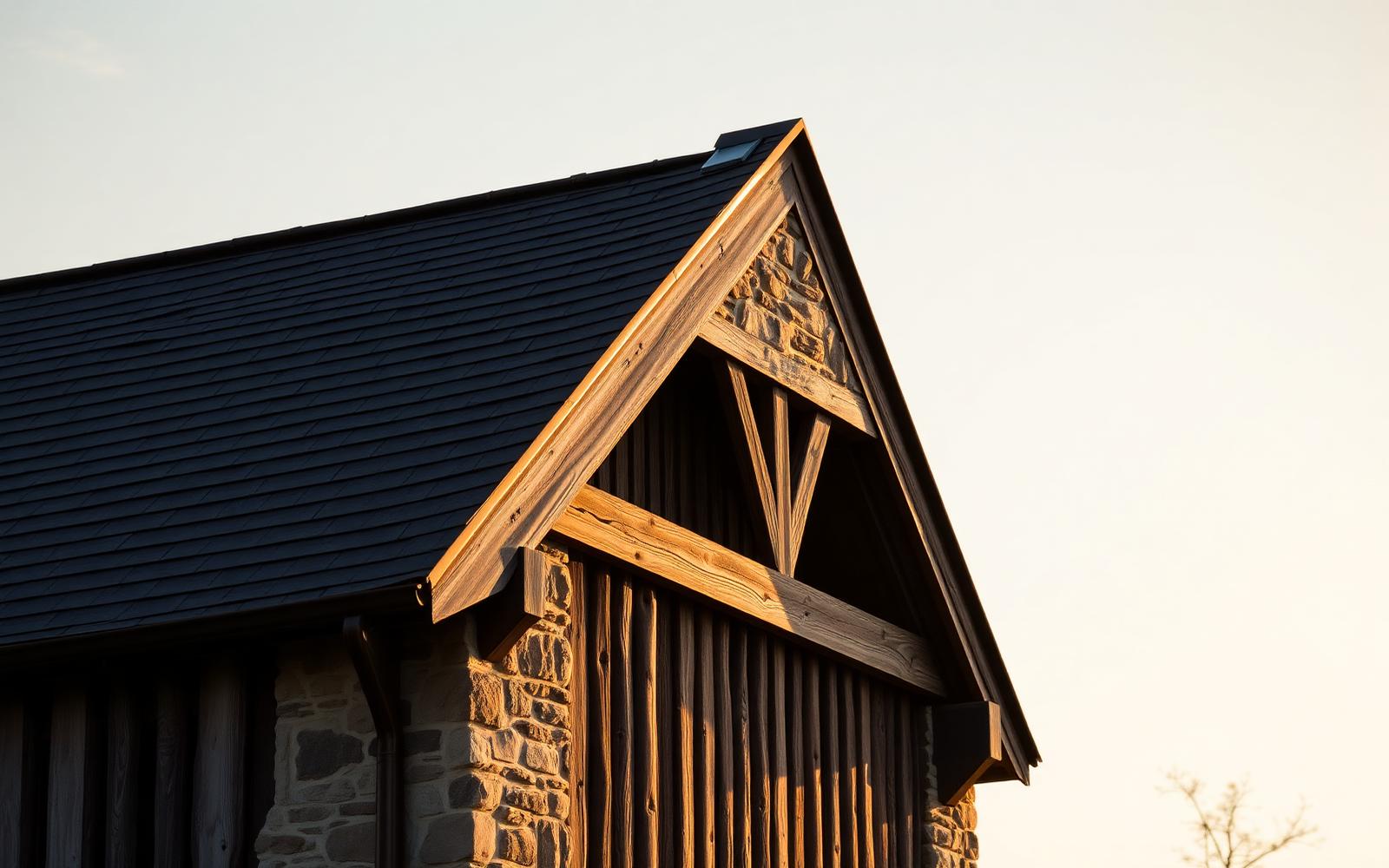
On an eighteenth or early nineteenth century Pennsylvania farmhouse, the pitch is often close to twelve on twelve. Snow slides. Water leaves quickly. The attic is tall enough to stand in at the ridge, which is why so many of these houses have a third floor that was never quite finished and is now either a wonderful room or a storage problem.
Steep roofs are honest about age. They also tend to come with the rest of the period package: plaster over lath, chimneys that were built for stoves rather than furnaces, and joists sized by feel rather than by table.
The bank barn lesson
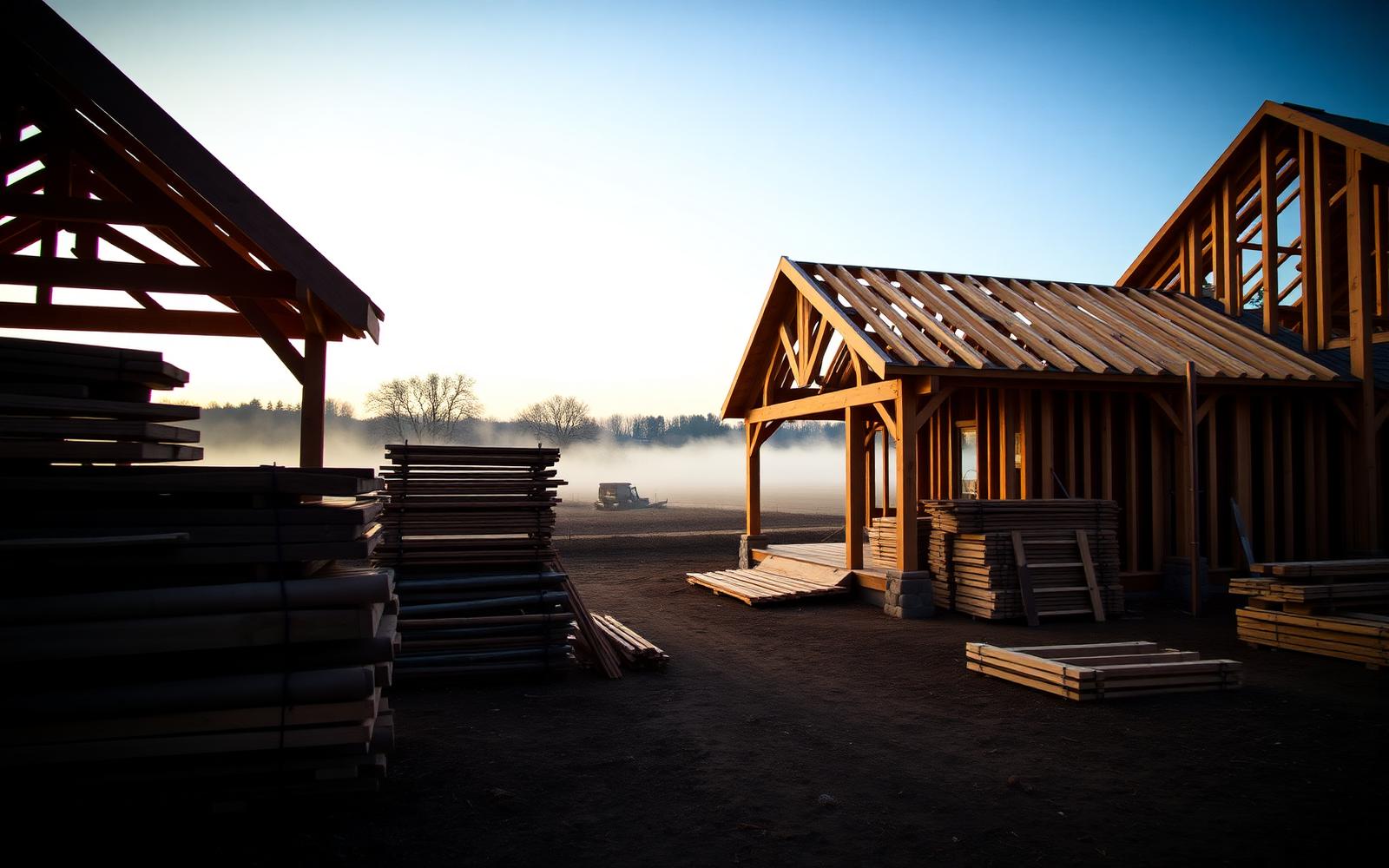
The most instructive roof in the county is not on a house at all. A bank barn is built into a slope so that a wagon can drive onto the second level while animals live below at grade. The roof spans an enormous width with no interior wall doing the work, held by a timber truss that transfers load outward to the stone.
Every good house borrows something from a barn: honest structure, generous span, light coming from two directions.
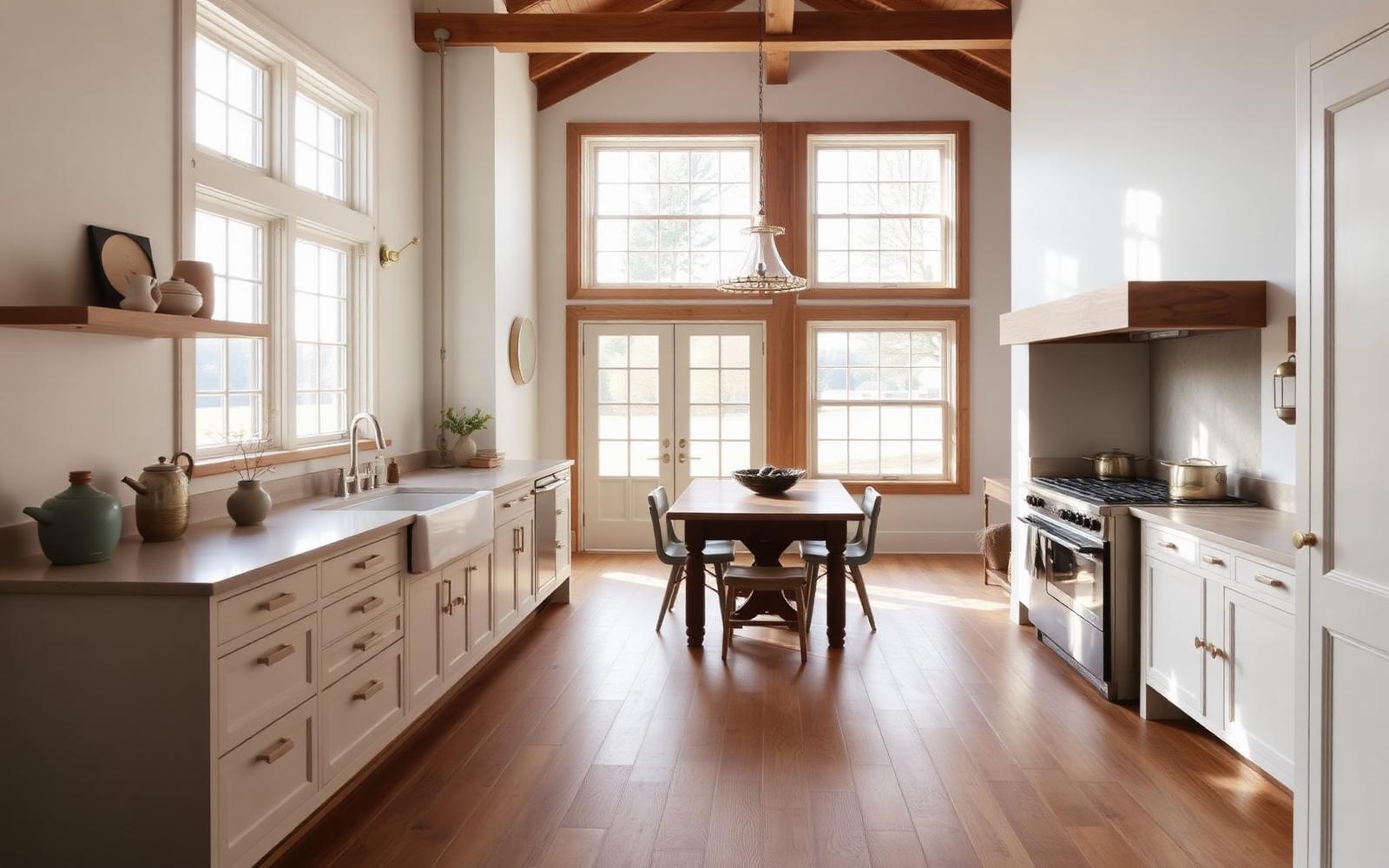
When you see a new home with a great room that feels calm rather than cavernous, it is usually because the designer borrowed that logic. Exposed structure, a long unbroken ridge, windows on two walls so the light crosses rather than glares.
What the complicated roof is telling you
A roof with six or seven separate planes usually means the floor plan grew outward in bays and bump outs. It photographs well from the street. It also creates valleys, and valleys are where roofs eventually fail. If you are walking a resale with a busy roofline, the questions worth asking are the age of the shingles, whether the valleys are woven or metal lined, and whether there is any staining on the ceilings below them.
- Look for a straight ridge. Sag in the middle can mean an undersized or altered structure.
- Count the valleys. More valleys, more maintenance.
- Check where the gutters end up. Water pushed against a foundation becomes a basement problem within a few winters.
- Note the overhang. Generous eaves keep weather off the walls and windows, which is why older houses with deep overhangs age so well.
What this has to do with financing
Roof condition is one of the few architectural details that reliably shows up in an appraisal and in a lender's conditions. On a conventional purchase, a roof at the end of its life can lead to a repair requirement before closing. On a renovation loan, that same roof becomes part of the scope you are financing rather than a reason the deal falls apart.
What to take from this
- Pitch tells you roughly when the house was built and how the attic can be used.
- Valleys and gutter discharge points are where roofs and foundations actually fail.
- Roof condition can become a lender condition, so it belongs in the conversation before you write an offer.
- If the roof needs work, ask about renovation financing before you decide the house is out of reach.
Where to go next
The Journal is written for people thinking about homes, not just financing them. Articles are educational and reflect general observation about Pennsylvania housing, architecture, and daily life. Nothing here is an offer to lend, a commitment to a rate, or an appraisal of any particular property. Corie Adams, NMLS #1875205. Network Funding, LP, NMLS #2297. Equal Housing Opportunity.