“You do not spend time in a hallway. You spend your whole life passing through one.”
There is a moment in nearly every floor plan discussion when someone points at the hallway and asks whether it needs to be that wide. It is a reasonable question. Hallways are unfurnished, unlistable and unphotographed. Nobody has ever described a house as having a great corridor.
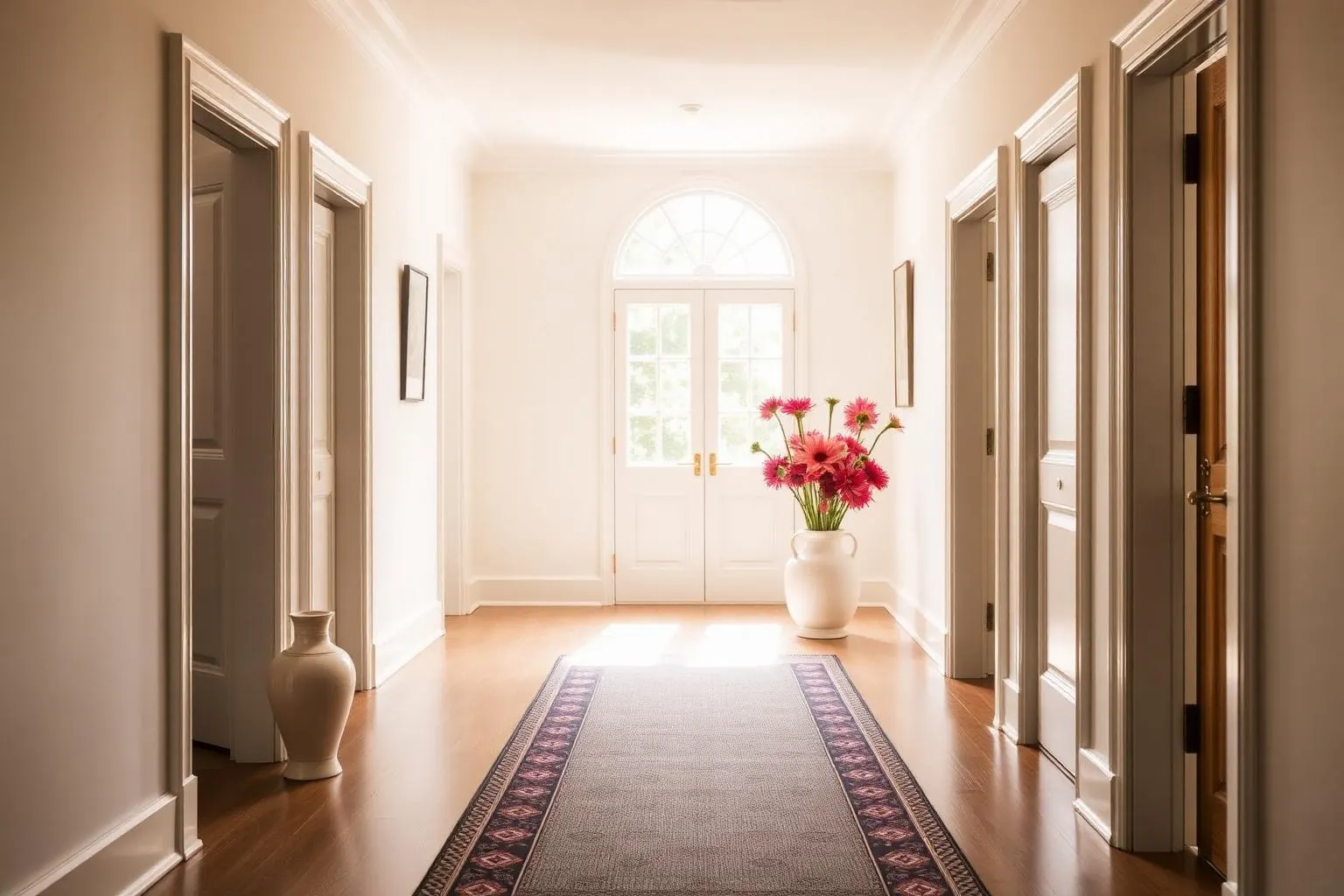
And yet. Walk through an older house with a proper center hall and then walk through a newer one with a thirty six inch corridor, and your body knows the difference immediately, even if you cannot name it. One lets two people pass. The other requires a small negotiation, every time, for as long as you own the house.
What extra width buys
- Two people passing without turning sideways, which is the whole thing, honestly.
- Furniture that can actually get to the room it is meant for, including a sofa and a mattress.
- Somewhere to put a chair, a bookcase or a table with a lamp, which turns circulation into usable room.
- Accessibility over a long horizon. A hallway that accommodates a walker or a wheelchair keeps a house livable later.
That last one is the argument that changes minds. Most people buying a house are not thinking about mobility. Most people who stay in a house for thirty years eventually are, either for themselves or for a parent, and the retrofit cost of widening a corridor is far higher than the cost of building it wide.
Why older Pennsylvania houses got this right
The center hall in an older house was not generosity, it was ventilation. Open the front door and the back door and the hall becomes a chimney for air, which was the entire cooling strategy before mechanical systems. The width came from function, and the pleasantness was a byproduct.
The stair usually sits in that hall, which means the hall is also the light well of the house. A wide hall with a window on the landing distributes daylight to the middle of the plan, which is where light is hardest to get. Narrow the hall and you lose the light along with the width.
The parts of a house you pass through are the parts you experience most often.
Where the money question comes in
Circulation is the easiest thing to cut on a plan because it does not appear as a room. When square footage is being trimmed to hit a number, corridors get narrowed, landings get shrunk, and a stair gets tucked against a wall with no window. Each cut looks small on paper. Together, they change what it feels like to move through the house.
If you are choosing where to spend on a plan, my honest opinion is that circulation and daylight are worth more over twenty years than an additional bedroom you will use for storage. Rooms can be furnished later. Geometry cannot.
Downsizing without shrinking
People downsizing often assume they should optimize every square foot, and end up in a house that is efficient and slightly airless. A smaller house with one generous corridor and one genuinely large room usually lives better than a smaller house with five modest rooms and tight passages between them.
Stand in the hall of a house you are considering, in the middle, and look in both directions. If the view ends in a wall three feet away, that is what you will see thousands of times. If it ends in a window, that is what you will see instead. Same square footage. Very different fifteen years.
What to take from this
- Generous circulation supports furniture, passing traffic and long term accessibility.
- Center halls in older houses were built for ventilation and daylight, and still deliver both.
- Narrowing corridors is the quietest way a plan loses quality.
- When downsizing, prioritize one generous space over several tight ones.
The Journal is written for people thinking about homes, not just financing them. Articles are educational and reflect general observation about Pennsylvania housing, architecture, and daily life. Nothing here is an offer to lend, a commitment to a rate, or an appraisal of any particular property. Corie Adams, NMLS #1875205. Network Funding, LP, NMLS #2297. Equal Housing Opportunity.