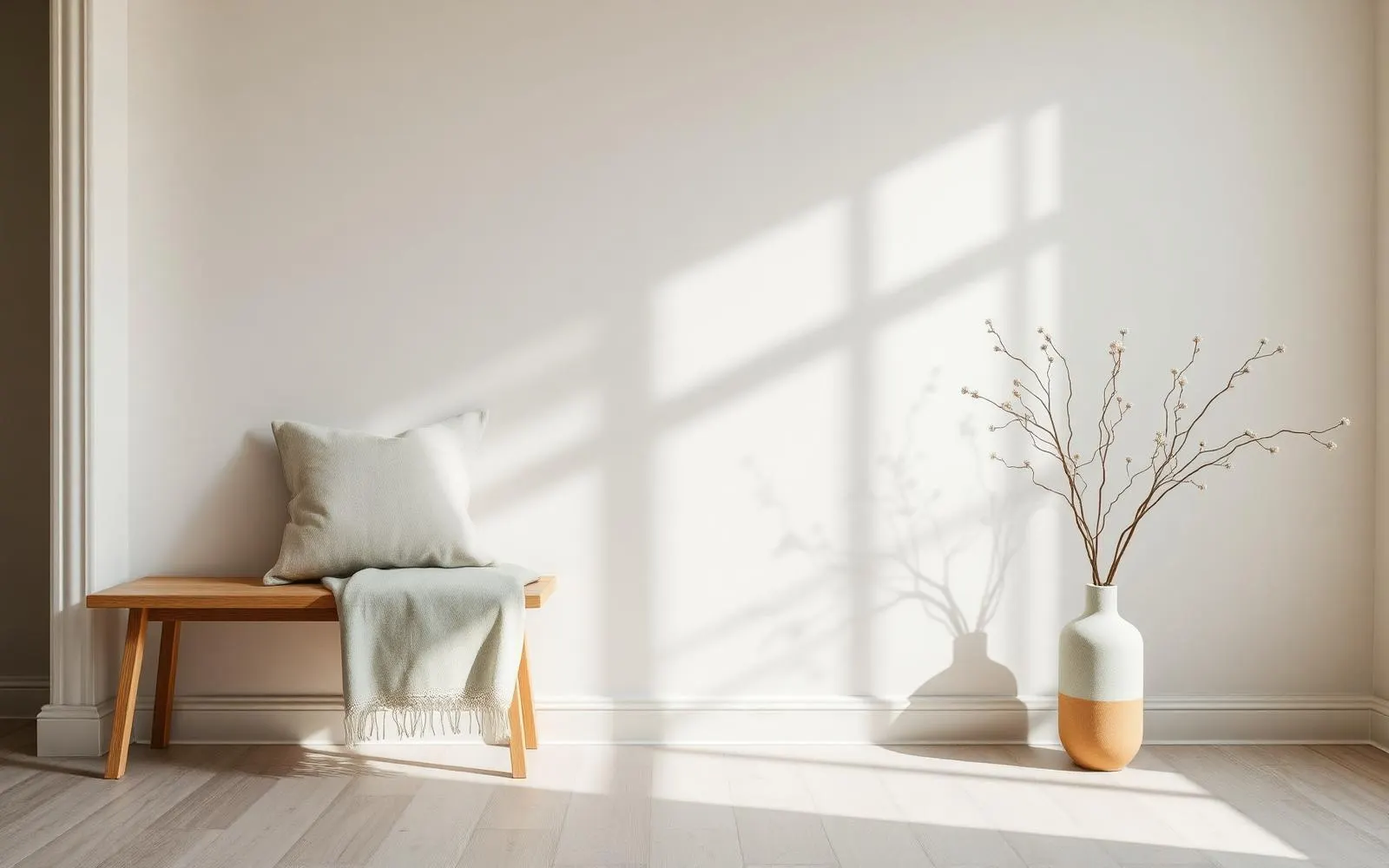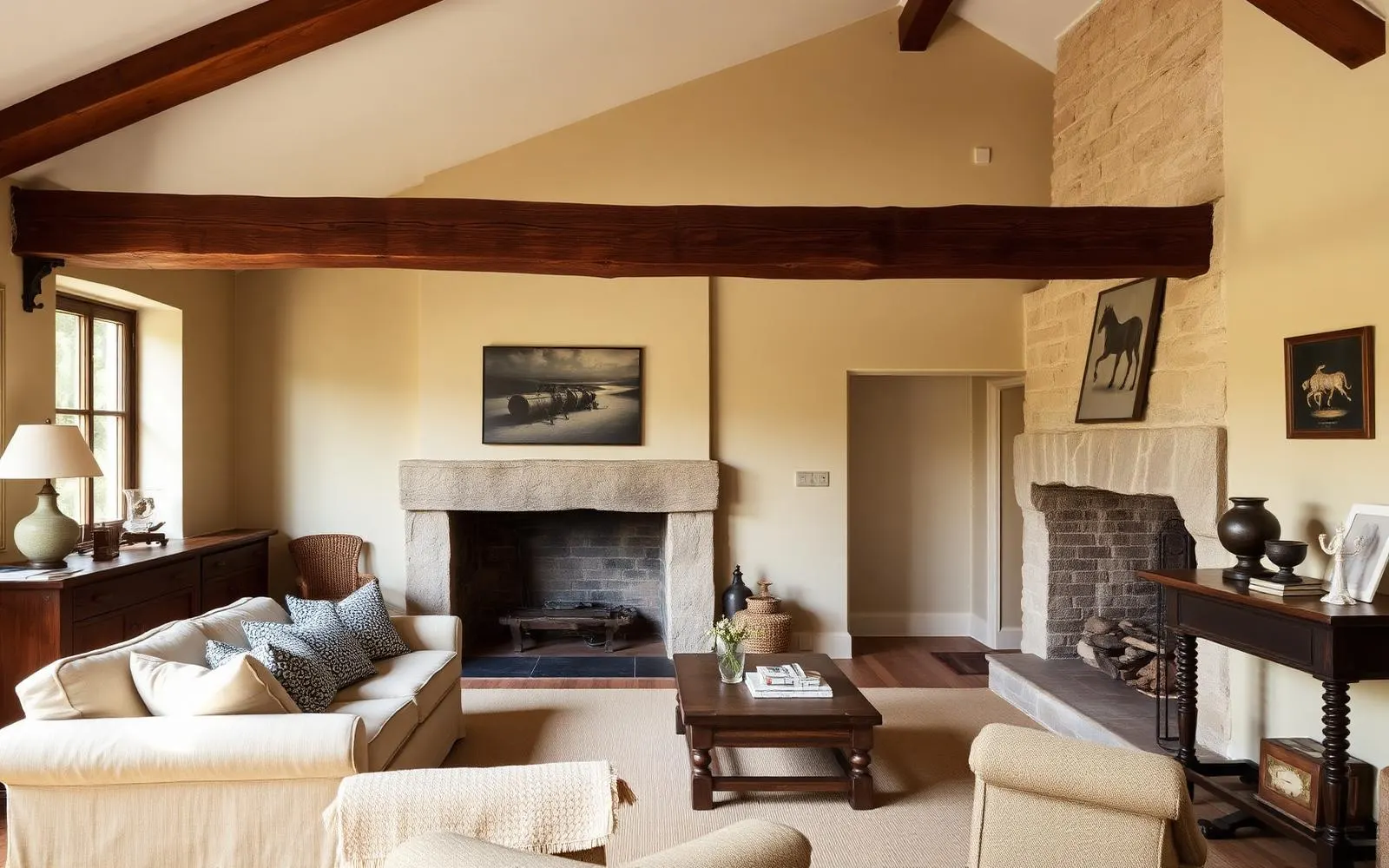
“Heritage is a set of materials, not a set of signs. Use the materials and skip the signs.”
Berks County has two histories running side by side. One is agricultural, the deep Pennsylvania German tradition of barns, orchards and stone farm buildings. The other is industrial, the iron, textile and railroad economy centered on Reading that shaped the county's towns and left behind brick mills, foundries and workers' housing.
Both are honest sources for an interior. The trouble is that the shorthand version of that inspiration, sliding barn doors, galvanized letters, printed signs about coffee and blessings, has been so thoroughly commercialized that it now reads as a costume. The materials themselves have not been used up. Only the clichés have.
Start with a short material list
The palette that comes out of this heritage is small and satisfying: aged oak or chestnut, blackened or waxed iron, local stone, lime plaster, unbleached linen and cotton, stoneware, and brass that has been allowed to dull. Choose four or five of those, not all of them, and repeat them.
Repetition is what makes a material read as intentional. One iron object in a room is an accessory. Iron in the hardware, the lighting and one piece of furniture becomes a decision.
Age the things that were always aged
The distinction that keeps this look out of theme park territory is whether the wear is plausible. A worn threshold, a scarred work table, a hinge polished by a hand: those things wear because they were used. A brand new cabinet distressed with a chain does not, and the eye knows.
So buy old where age is the point, and buy simple and new where it is not. An eighteenth century blanket chest and a plain contemporary sofa in heavy linen belong in the same room. A reproduction of an eighteenth century sofa usually does not.
Color: warm, low, and mostly from the material
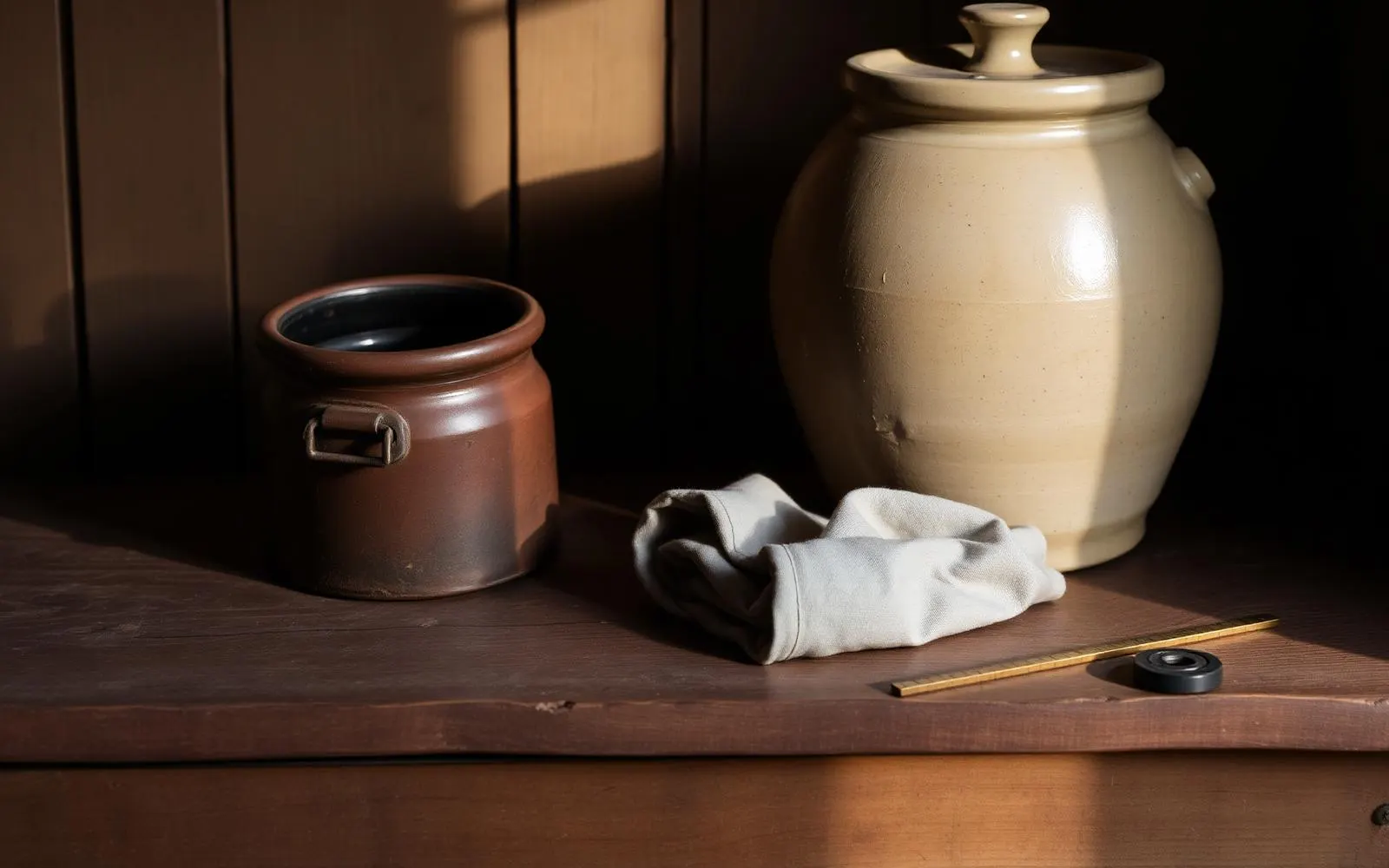
This heritage does not suggest bright color. It suggests the range you get from clay, unbleached fiber, oxidized metal, and stone: soft whites with warmth in them, deep charcoals, muted olive and sage, iron oxide reds used in very small quantities on a door or an interior of a cupboard.
A practical approach is to keep the large surfaces in one warm neutral and let color arrive only through objects and textiles. Rooms built this way age well because the changes happen at the scale of a cushion rather than a wall.
If a room needs an explanation, it is decorated. If it needs only a lamp turned on, it is designed.
Texture is the substitute for pattern
Almost nothing in this tradition is patterned. Interest came from surface: the grain of a plank, the ripple in old glass, the tooth of plaster, the slub in a linen weave, the pitting on cast iron. A room built on texture stays quiet at a distance and rewards attention up close, which is the exact opposite of most contemporary decorating.
One useful test is to photograph the room in black and white. If it still looks rich with all the color removed, the texture is doing its job.
Collected, not curated
The best rooms of this kind look assembled over years, because they were. Regional auctions, farm sales, estate sales and small local antique dealers are where the material actually comes from, and the pieces that end up mattering are usually the ones bought for a specific place rather than for a style.
Give collections room. Six stoneware crocks lined up on an open shelf are a display. Two crocks, one holding wooden spoons on a counter, are part of a life. The difference is whether the objects still have a job.
What to leave out
- Word art, and anything printed with a slogan.
- Sliding barn hardware on rooms that never had a barn door.
- Faux distressing on new casework.
- Matched furniture sets, which flatten a room instantly.
- More than one strongly patterned textile per room.
What remains is a room that could be in a converted mill in Reading, a stone farmhouse outside Kutztown, or a plain suburban house that simply decided to be warm. That portability is the point. The heritage supplies materials and restraint, not a fixed style, and materials travel anywhere.
What to take from this
- Pick four or five materials from the local tradition and repeat them.
- Buy genuinely old where wear matters; buy plain and new where it does not.
- Use texture rather than pattern, and test the room in black and white.
- Keep objects in service; a collection with a job is not a display.
The Journal is written for people thinking about homes, not just financing them. Articles are educational and reflect general observation about Pennsylvania housing, architecture, and daily life. Nothing here is an offer to lend, a commitment to a rate, or an appraisal of any particular property. Corie Adams, NMLS #1875205. Network Funding, LP, NMLS #2297. Equal Housing Opportunity.