“Style is what a room looks like. Sequence is what a room does. Only one of them makes dinner easier.”
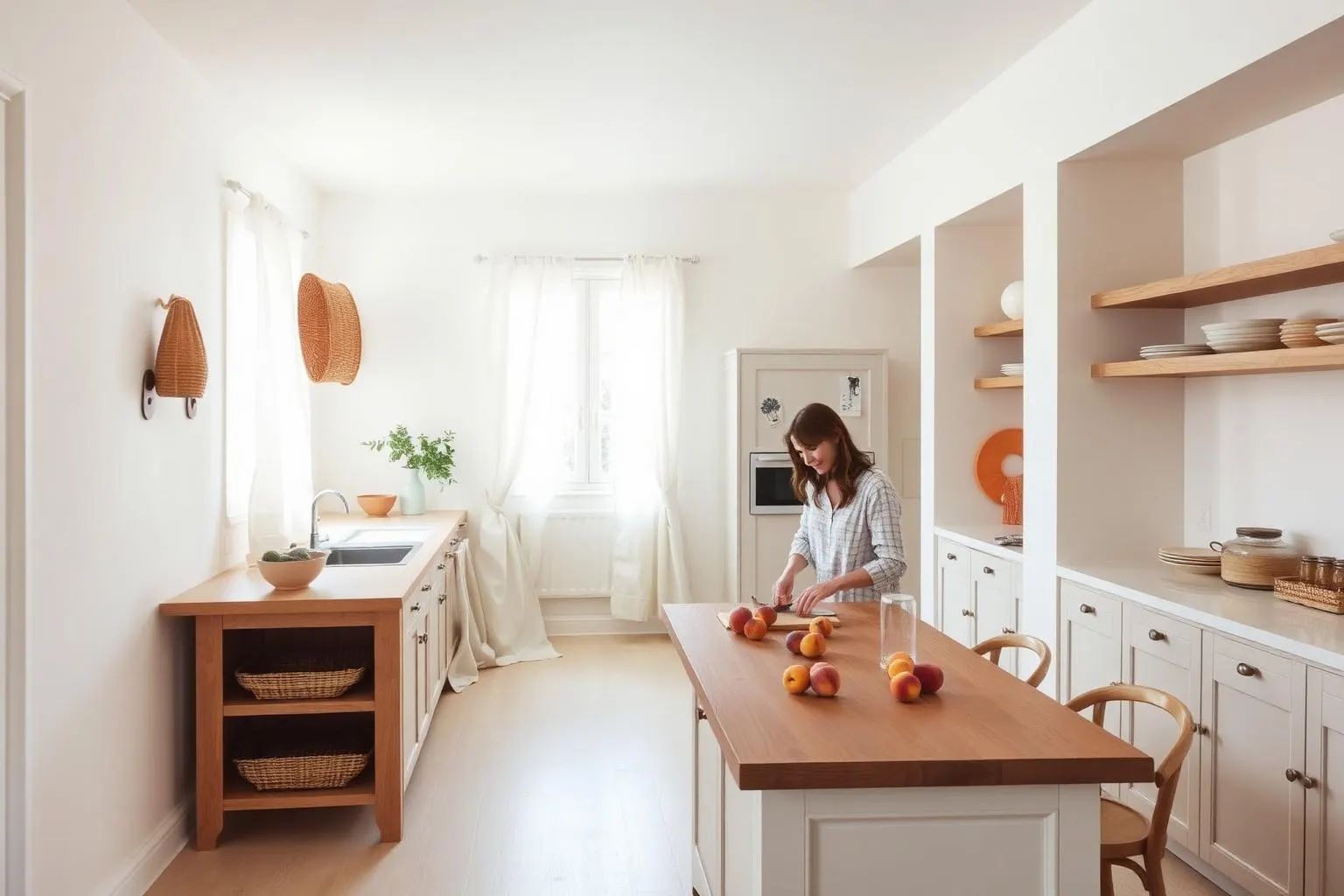
The most common kitchen mistake I see in Pennsylvania houses is not a bad choice of tile. It is a room dressed as a farmhouse kitchen that has never once functioned like one. A farmhouse kitchen was a workroom. It had a door to the outside, a big flat surface in the middle, and everything within a step of everything else because someone was in there for four hours making a meal for eight people.
Most of us are not doing that. We are making dinner in thirty five minutes on a Tuesday while somebody does homework at the counter and somebody else asks about a permission slip. Those two rooms are not the same room. Choosing the aesthetic of the first while living the second is why so many renovated kitchens photograph beautifully and irritate their owners.
Start with the six o'clock sequence
Before you look at a single finish, write down what happens between five thirty and six thirty. Bags land somewhere. Something comes out of a refrigerator. Something is cut. Something is heated. Somebody sets a table or does not. Dishes accumulate. That sequence is the actual brief for the room.
When you lay it out that way, the priorities change. A landing surface next to the refrigerator matters. Counter to the left and right of the range matters. Somewhere for bags and mail that is not the island matters more than almost anything, because an island that becomes a mail table stops being a work surface within a week.
Every kitchen has a surface that quietly becomes the place where everything lands. Choose it on purpose.
The four decisions that carry the room
- Where the light comes from, and whether you are working with your back to it. Under cabinet lighting fixes more kitchens than new cabinets do.
- How far it is from the sink to the range to the refrigerator. Short is not always better. Cramped is always worse.
- Where the trash lives. If it is not near the prep surface, the counter becomes the trash staging area.
- What the floor is. It is the largest surface in the room and the one your knees have an opinion about.
Material honesty, without the sermon
There is a reason old work surfaces were wood, soapstone or steel. Each one ages by being used, which is different from wearing out. A wood counter that gets oiled twice a year looks better at ten years than at one. That is a quality worth wanting in a room where you will spill things.
The alternative approach, choosing surfaces that must be protected in order to look correct, produces a room that makes you slightly anxious. A kitchen you are anxious in is a kitchen you use less. That is the whole argument against certain finishes, and it has nothing to do with taste.
What a kitchen is worth, honestly
Kitchens are the renovation people most often expect to pay them back. Sometimes they do, partially. It is more useful to think about a kitchen the way you think about a roof and a garden at once. Part of it is condition, which protects value. Part of it is pleasure, which does not appear on an appraisal and is still a legitimate reason to spend money.
How a renovation gets paid for changes what is realistic. Cash and a phased plan lets you do the work in the order that solves problems. Financing the work as part of a purchase lets you buy a house whose kitchen has not been touched since the seventies, which is frequently the best value on a street. Those are different strategies and they suit different people. Neither is the default.
The test
A month after the work is done, stand in the doorway at six in the evening while somebody else is cooking. Watch how many extra steps get taken. Watch where things pile up. That is the honest review, and it is more useful than any photograph, because the room is finally doing the only job it ever had.
The best kitchen I have stood in this year had a chipped enamel pot on the stove and a stack of library books at the end of the counter where the mail was supposed to go. Nobody had solved everything. They had solved dinner.
What to take from this
- Design the room around the six o'clock sequence, not the photograph.
- Landing surfaces, trash placement and lighting outrank finish selection.
- Choose materials that age by use rather than materials that must be protected.
- If the kitchen is why a house is affordable, ask about renovation financing before walking away.
The Journal is written for people thinking about homes, not just financing them. Articles are educational and reflect general observation about Pennsylvania housing, architecture, and daily life. Nothing here is an offer to lend, a commitment to a rate, or an appraisal of any particular property. Corie Adams, NMLS #1875205. Network Funding, LP, NMLS #2297. Equal Housing Opportunity.