“A room needs one surface where nothing is happening, or the eye never rests.”
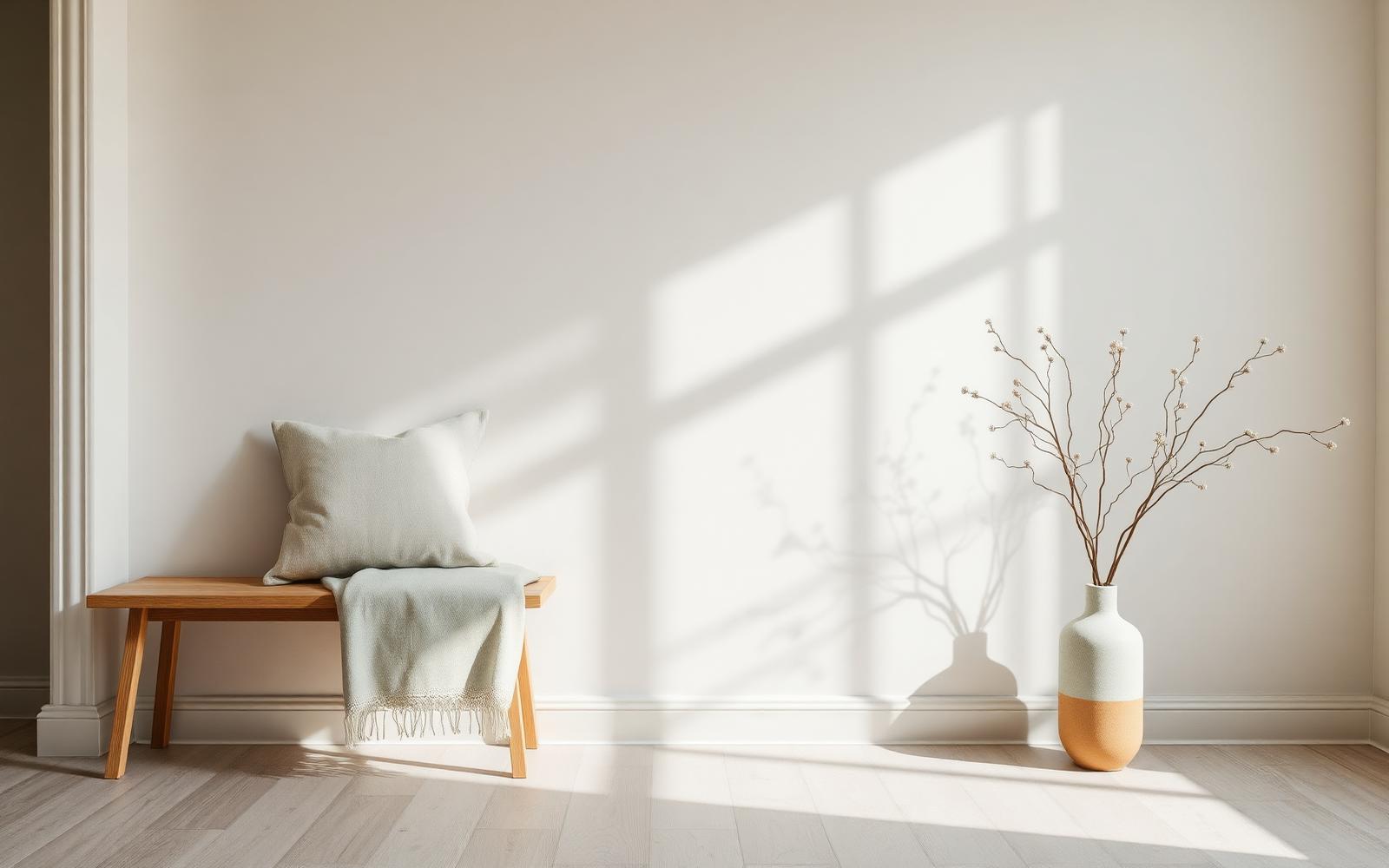
The rooms people photograph and the rooms people relax in are not always the same rooms. The difference is usually a wall that was left alone.
What the empty wall does
It gives light somewhere to land. It gives the furniture a background instead of competition. It makes the objects you do keep read as chosen rather than accumulated. And in a small room, which most Pennsylvania rowhomes and older farmhouses have plenty of, it is the cheapest way to buy the feeling of space.
Three low cost moves
- Limewash or a flat matte paint. Both absorb light rather than bouncing it, which is what makes an old plaster wall look deep instead of flat.
- One piece of furniture with visible legs. Air under furniture reads as floor, and floor reads as space.
- A single tall object rather than three medium ones. Height draws the eye up and makes an eight foot ceiling behave like nine.
Buy fewer things and better light. That is most of it.
Where the money should go
In an older house, the highest return per dollar is almost never in decoration. It is in window treatment that actually lets the window work, in a light fixture placed where people sit rather than in the geometric center of the ceiling, and in floors that were refinished rather than covered.
What to take from this
- Leave one wall in every room genuinely empty.
- Furniture with visible legs makes a small room read larger.
- Spend on light placement and window function before decoration.
- Finance systems and structure. Pay cash for taste.
Where to go next
The Journal is written for people thinking about homes, not just financing them. Articles are educational and reflect general observation about Pennsylvania housing, architecture, and daily life. Nothing here is an offer to lend, a commitment to a rate, or an appraisal of any particular property. Corie Adams, NMLS #1875205. Network Funding, LP, NMLS #2297. Equal Housing Opportunity.