“Clutter is rarely about how much you own. It is about whether things have an address.”
Small old houses were built by people who assumed you would own less. A bedroom might have one shallow closet or none, because clothes lived in a wardrobe that you brought with you. A kitchen had a pantry because dry goods came in sacks. There was no room for eleven pairs of shoes by the front door, because nobody had eleven pairs of shoes.
So the modern experience of living in one of these houses is a slow negotiation between how the house thinks and how you actually live. The people who win that negotiation almost always do the same thing. They stop buying storage products and start building storage into the house.
Find the dead space first
- Under the stairs, which in most narrow houses is a triangular void behind plaster.
- The wall thickness between studs, which is three and a half inches of shallow shelving in a hallway or bathroom.
- Above door frames, where a shelf running the width of a room stores what you use twice a year.
- Window seats over a radiator alcove, which is both storage and the best seat in the house.
- The last two feet of a long room, which can hold full height cabinetry without anyone perceiving the room as shorter.
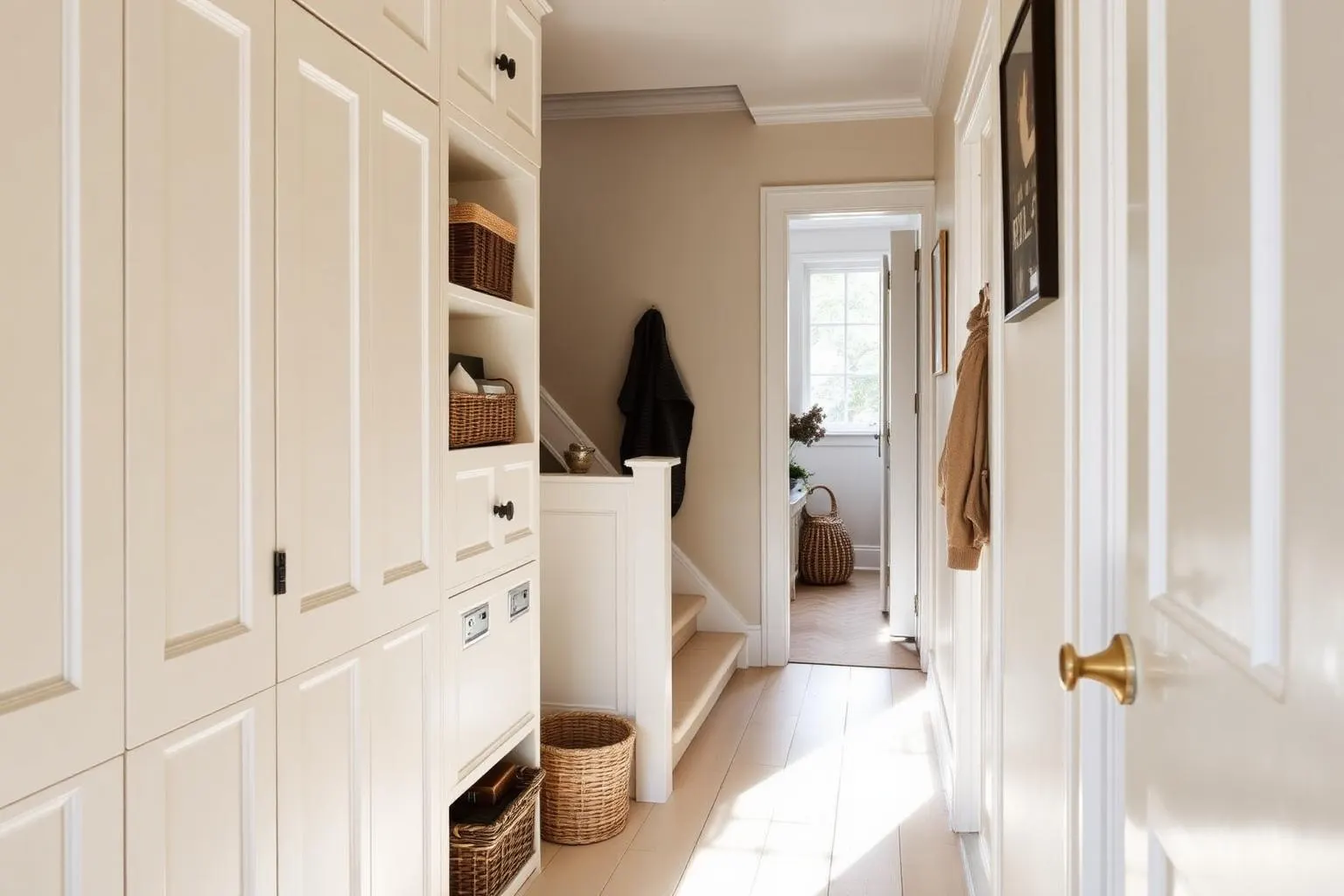
Every one of those is architecture rather than furniture, which is why they read as calm. A room with built ins looks finished. The same volume of storage in freestanding pieces looks like a room that is losing.
The entry decides everything
If a house feels chaotic, look at the first six feet inside the door. That is where the day arrives: coats, bags, shoes, mail, keys, sports equipment, the package somebody left. Old houses rarely provide for this because doors opened directly into a parlor that was not meant to absorb a day.
A bench with boot storage beneath it, a rail of hooks at two heights, a shallow drawer for keys and a basket for mail solves more visual noise than any other intervention in a small house. It is also modest work. A carpenter can do it in a day, or you can, over two weekends and with some swearing.
Build the first six feet inside the door and the rest of the house calms down.
Downsizing is a storage problem before it is an emotional one
People moving from a large house to a small one usually plan the emotional part and underestimate the spatial one. The reliable approach is to measure before you sort. Know the linear feet of closet, shelf and cabinet in the new place, then decide what fits into that number, rather than deciding what you love and hoping.
Doing it in that order also tells you where to spend. If the new house is four linear feet short of what a household needs, that is a small joinery project, not a reason to buy a bigger house. The difference between those two conclusions is significant in money.
The morning after
You can tell a house with good storage by how it looks at seven in the morning, not at seven in the evening. Evening tidiness is willpower. Morning tidiness is architecture, because at seven in the morning nobody is making decisions. Things go where things go.
That is the quiet luxury in a small house. Not more space. Fewer decisions.
What to take from this
- Build storage into the structure instead of buying storage furniture.
- Look for dead space under stairs, between studs, above doors and at the end of long rooms.
- Solve the first six feet inside the front door before anything else.
- When downsizing, measure the new storage before sorting your belongings.
The Journal is written for people thinking about homes, not just financing them. Articles are educational and reflect general observation about Pennsylvania housing, architecture, and daily life. Nothing here is an offer to lend, a commitment to a rate, or an appraisal of any particular property. Corie Adams, NMLS #1875205. Network Funding, LP, NMLS #2297. Equal Housing Opportunity.